For those using illicit opioids to manage their chronic pain, cannabis may be a beneficial—and a less dangerous—alternative, according to new research from the BC Centre on Substance Use (BCCSU).
from Addiction news https://ift.tt/2QuxMPX
For those using illicit opioids to manage their chronic pain, cannabis may be a beneficial—and a less dangerous—alternative, according to new research from the BC Centre on Substance Use (BCCSU).
from Addiction news https://ift.tt/2QuxMPX

Universal Pictures
When the dawn comes, the new Cats trailer will be a memory, too, and a new day will begin.
As Vox’s chief Cats correspondent, here are some of the things that have happened to me over the past 6 months since the first trailer for the musical’s live-action adaptation was released, and as we wait for its December 20 release date:
And still, readers, none of this has been as surreal as watching the latest trailer for Cats.
To be clear, the latest trailer is pretty much like the previous trailer. The Cats are still rocking the uncanny valley aesthetic that exists between the Instagram cat filter that scares your actual cat and a creepy talking children’s toy you find in the attic of a dead relative and try to burn before it follows you home, twitching its tail and saying, “My name’s Bombalurina, what’s yours?” as you desperately seek an escape.
The cats are still sporting that terrible CGI fur, and everyone still looks like this:
/cdn.vox-cdn.com/uploads/chorus_asset/file/19390005/Screen_Shot_2019_11_19_at_11.40.40_AM.png)
Yes, that’s People’s Sexiest Man of the Year 2018, Idris Elba. Yes, that’s the magnificent, too-good-for-this-world, perennial “next James Bond”, sitting naked on top of a giant plaster Egyptian cat covered in horrible blurry CGI fur that somehow still allows us to see his cat nipples.
All this was technically there in the first trailer, too. But where one could hope, in the first trailer, that the heady mix of camp, familiar music, and good intentions could keep Cats from being a total trainwreck, the arrival of the second trailer has made everything all too real. Cats is coming. This horrifying live-action version of Cats is coming. There is no escape. It’s really happening.
Who allowed this? The easy answer is Cats director Tom Hooper, aided and abetted by Cats creator Andrew Lloyd Webber, but the harder answer is that maybe the universe allowed this. Maybe the universe looked at us, at all our sins, at the human race teetering out of control, and thought that after a year of escalating climate change, more mass shootings, democracy eroding, streaming wars, and “OK boomer,” the cap-off 2019 needed was a parade of blurry dancing anthropomorphic furry cats, presided over by a terrifyingly orange Judi Dench, choosing who will go to cat heaven.
/cdn.vox-cdn.com/uploads/chorus_asset/file/19390034/Screen_Shot_2019_11_19_at_12.10.31_PM.png)
Why does Judi Dench look like a creepy revivalist preacher who’s about to faith-heal the cat whose hand she’s holding? Why is she wearing a fur coat? Isn’t she a cat who’s covered in fur? Why am I doing this to myself? Why did this show run on Broadway for 18 years?
My favorite Cats song is “Macavity.” Once, as a child, I named my cat Macavity. That was a better time — a time before all I had left were the burnt-out ends of smoky days, the stale, cold smell of morning, and this Cats trailer.
Anyway, there’s a new Cats trailer! Cats, now and forever. Cats.
from Vox – All https://ift.tt/2OpV9HO

Lt. Col. Alexander Vindman is the top Ukraine expert on the National Security Council and is the first White House aide to testify in the House impeachment inquiry. | Chip Somodevilla/Getty Images
It’s standard practice for officers testifying on Capitol Hill to wear their uniform.
Four witnesses were called to testify on the third day of public hearings into the House impeachment inquiry. Of the four, Alexander Vindman, a National Security Council staffer and a US Army lieutenant colonel, was the only witness to come in full military garb — an outfit that placed Vindman’s military career on full display.
It’s standard practice for military officers testifying on Capitol Hill, but the dress uniform became a flashpoint on Tuesday.
Vindman is the top Ukraine expert on the NSC, which advises the president on national security and foreign policy matters, and has served in American embassies in Ukraine and Russia.
As Vox reported, that makes Vindman the first White House aide to testify in the inquiry. Vindman said he has not personally interacted with President Donald Trump, but was on the line for Trump’s two phone calls with Ukrainian President Volodymyr Zelensky in April and July.
Despite his background as a decorated veteran, Vindman has been criticized by Republicans and conservatives on cable television for complying with the House subpoena to testify. On Monday, the night before Vindman’s testimony, Republican lawmakers, including Sen. Ron Johnson of Wisconsin and Rep. Doug Collins of Georgia, attacked his credibility as a witness, the Washington Post reported. Fox host Laura Ingraham and CNN commentator Sean Duffy have also questioned Vindman’s patriotism and national loyalty through insinuations about his immigrant background. (Vindman’s family fled the Soviet Union as refugees 40 years ago.)
On Tuesday, Republican attorney Steve Castor also used his time to ask Vindman about whether he was offered the post of Ukrainian defense minister. This line of questioning seems to be part of a conservative effort to discredit Vindman’s allegiance to the US.
The uniform, then, became a focus point for Republicans who believe the soldier wants to look more authoritative, and another line of attack for the GOP to question Vindman’s credibility.
Vindman, a Purple Heart recipient, previously wore his decorated Army uniform to the closed-door hearings in late October. While his outfit is more of a formality than a personal choice, the uniform could create the perception of credibility, especially among the public. Regardless, Vindman seemed intent on publicly presenting himself as an Army veteran in accordance to his testimony as a national security staffer.
/cdn.vox-cdn.com/uploads/chorus_asset/file/19390462/1184169250.jpg.jpg)
From the start, Vindman sought to highlight his work as a public servant in the opening statement: “I have dedicated my entire professional life to the United States of America,” he said.
“The uniform I wear today is that of the United States Army … We do not serve any particular political party, we serve the nation. I am humbled to come before you today as one of many who serve in the most distinguished and able military in the world,” Vindman added.
The Washington Examiner, a conservative news site, reported that members of the military who serve with the NSC typically wear suits, citing various unnamed military officials who disagreed with Vindman’s outfit. There’s a case for that: active-duty troops can wear civilian business attire if given a waiver to do so. It’s unclear if Vindman was given permission to wear a suit instead of his uniform to the hearing.
Trump’s former National Security Adviser H.R. McMaster has worn his Army uniform for some official duties in the White House, according to the Military Times in 2017. McMaster’s choice of dress was “an apparent break from other senior military officers who’ve served as high-profile political appointees while remaining on active duty.”
And again, that’s in the daily business of the NSC — not in front of lawmakers on Capitol Hill.
Vindman is still an active-duty Army officer, and according to retired naval aviator Guy Snodgrass in an interview with Cheddar, “it’s [Vindman’s] obligation, in accordance with his oath of office, to [testify] in uniform.”
Because there’s mixed reporting (and bad takes) about this issue, here’s what retired Naval aviator Guy Snodgrass told me this last week about Lt. Col. Vindman appearing on the Hill in uniform: pic.twitter.com/Cgs0fhsF0m
— j.d. durkin (@jiveDurkey) November 19, 2019
When referred to as “Mr. Vindman” during his testimony by Rep. Devin Nunes, Vindman interrupted to ask the Republican representative to use the proper title of lieutenant colonel when addressing him.
Rep. Devin Nunes refers to Lt. Col. Alexander Vindman as “Mr. Vindman.”
“Ranking member, it’s lieutenant colonel Vindman, please,” Vindman responds. https://t.co/SfAn7B5WcJ #ImpeachmentHearings pic.twitter.com/3i5D3OlMNP
— ABC News (@ABC) November 19, 2019
The uniform-based attacks were part of a broader hit on Vindman’s integrity. Republicans questioned the officer’s loyalty to the US because he speaks Ukrainian and emigrated from that country to America with his father. They targeted how Ukraine’s government thrice offered him the role of defense minister, which Vindman each time declined. And they painted him as a deep state operative looking to thwart Trump’s foreign policy.
They proved none of it. But when their defense of Trump’s conduct toward Ukraine lacks any merit, going after a witness is all they really have left.
Collins, the Republican lawmaker who criticized Vindman, doesn’t think that wearing a uniform would shield the NSC staffer from tough questions at the hearing, the Post reported. “I don’t think it shielded Oliver North from hard questions,” Collins told reporters.
Oliver North was a key witness in the 1987 Iran-Contra hearings, which was part of a congressional inquiry into whether President Ronald Reagan’s administration used profits from weapons sales to Iran to secretly fund a right-wing rebellious coup in Nicaragua.
/cdn.vox-cdn.com/uploads/chorus_asset/file/19390474/GettyImages_515546708.jpg)
Tens of millions of people across the nation tuned in to watch the Iran-Contra hearings; North, a staffer on the National Security Council and a key decision maker in the events of the scandal, was one of the most anticipated witnesses.
While testifying, North wore a green Marine Corps uniform, decorated with six rows of service ribbons and a White House staff badge.
During his testimony, North admitted that he had lied and misled Congress and the American public by falsifying official documents to protect his superiors and the president. Still, his testimony — somewhat influenced by his appearance in full military garb — resonated with the public.
A Washington Post columnist wrote that North “cleverly projected himself as a brave, America-loving Marine who put the nation’s interest above that of even his family.” And it worked: “An ABC news poll cited by The Post at the time found that 92 percent of the public thought that North did well in defending his actions; 64 percent came to see him as a victim and not a villain in the scandal.”
Arguably, the significance of North’s uniform was not the ribbons that reflected his military career and administrative achievements (his decorations were “no more distinguished than what might be seen on many lieutenant colonels’ chests,” the Sun Sentinel reported in 1987). It was the White House badge he wore despite being fired from his NSC post by Reagan as the scandal publicly unfolded.
The Los Angeles Times reported, “Once that badge was reserved for military officers actually serving on the President’s staff. But a recent rule change allows former White House staff officers, like North, to continue wearing the badge — even though his actions helped plunge President Reagan into the worst crisis of his presidency.”
North’s testimony in full military uniform swayed public opinion in his favor, despite his direct involvement in the Iran-Contra scandal. Vindman — a witness on Trump’s call to Ukraine who has no established connection with the President — has faced attacks on his credibility and patriotism, on top of his decision to wear a military uniform.
To his detractors, it’s a disgraceful choice to don a military outfit while testifying against the expected chain of command. To his supporters, it’s a symbol of Vindman’s patriotism and duty to his country beyond partisan politics.
from Vox – All https://ift.tt/2O483MG

Rep. Jim Jordan (R-OH) questions top US diplomat to Ukraine William B. Taylor Jr., November 13, 2019. | Chip Somodevilla/Getty Images
Republicans have repeatedly attempted to shift the focus onto the whistleblower to undermine the substance of the allegations. Tuesday was no different.
For weeks now, Republicans have said they’d like to unmask the whistleblower who filed a complaint about President Donald Trump’s conduct with Ukraine, despite concerns that it could put that individual at risk.
And during a public impeachment hearing on Tuesday, they kept up this push. Rep. Devin Nunes, the top Republican on the House Intelligence Committee, pressed Lt. Colonel Alexander Vindman on the briefing he gave about a July 25 phone call between Trump and Ukrainian President Volodymyr Zelensky to someone in the Intelligence Community.
House Intelligence Chair Adam Schiff emphasized repeatedly, however, that the hearing would not be used to expose the whistleblower.
Shifting the focus to the whistleblower — and his credibility — was one (of many) diversion tactics employed by the president and congressional Republicans almost as soon as the complaint came to light in September.
GOP lawmakers have slammed the complaint as “secondhand” and “hearsay” in a bid to question the allegations that are detailed by the whistleblower, while Trump has suggested that this person is a partisan actor. He’s led the charge in calling for the exposure of the whistleblower’s identity, arguing that he should be able to face his accuser.
/cdn.vox-cdn.com/uploads/chorus_asset/file/19372911/GettyImages_1182136477.jpg)
Beyond Republicans’ political motivations for pushing this argument, however, there’s little reason to name the whistleblower, since the impeachment inquiry is no longer really about him: The allegations listed in the original complaint have already been corroborated by other witnesses — not to mention Trump himself.
What’s more, whistleblower protection laws, including those that govern the Intelligence Community, enable government employees to file whistleblower complaints confidentially specifically to protect them from potential blowback. As NPR notes, though, there is no law that bars a member of Congress or the president from publicly naming the whistleblower.
In their attempts to undermine the complaint against Trump, Republican efforts to expose the whistleblower could have a massive chilling effect: They could endanger the person who has been named and they could deter future whistleblowers from coming forward.
Since Republicans have struggled to defend the substance of the accusations against Trump, they’ve sought to redirect the focus toward other aspects of the investigation including the process behind the inquiry, Hunter Biden’s ties to a Ukrainian corporation, and, of course, the whistleblower.
“The whistleblower is a disgrace to our country. A disgrace. And the whistleblower, because of that, should be revealed,” Trump has said.
Trump’s allies have taken a variety of approaches to call out the whistleblower: They’ve floated names in the closed-door committee depositions and at least one has posted an article on social media that names a specific individual. The whistleblower’s attorneys have declined to confirm his identity.
Republicans are actively focusing on the whistleblower in an effort to sow doubt about both the legitimacy of the complaint and the rationale for filing it. “One of the ways you determine someone’s credibility to determine what their motivation is, what kind of bias they have, is they need to be under oath answering your questions,” Rep. Jim Jordan said during a Fox News appearance.
As their logic goes, if the whistleblower came in with a preconceived bias, that could affect how reliable they are as a witness to wrongdoing.
The party’s dedication to protecting the president makes sense given his ongoing popularity with members of the Republican base, but the emphasis on the whistleblower specifically is something that’s faced resistance from GOP lawmakers as well.
Although lawmakers including Sen. Rand Paul and Jordan have been out front in the push to make the whistleblower publicly known, a number of Republicans have said that the individual’s identity should be protected.
As the law currently stands, the Inspector General who the whistleblower reports the complaint to is required to keep the person’s identity anonymous unless they need to share it as they process the complaint. However, as experts told NPR, there is nothing in the statute that directly limits the president or a member of Congress from divulging the whistleblower’s name.
Several Republican Senators have argued that lawmakers shouldn’t expose the whistleblower. “This person appears to have followed the whistleblower protection laws and ought to be heard out and protected. We should always work to respect whistleblowers’ requests for confidentiality,” Sen. Chuck Grassley said in an October statement.
Sens. Mitt Romney, Susan Collins, and John Thune are among those who told The Hill that the whistleblower protections should stay intact.
“Whistleblowers are entitled to protection under the law … To try to reveal the identity of this individual is contrary to the intent of the whistleblower law,” Collins told The Hill.
There are a lot of potential consequences from unmasking the whistleblower — few of them good. He could face professional backlash in the form of a firing, demotion, or removal of security clearance. Additionally, the whistleblower might experience personal threats to his safety, a chief reason their counsel has said they would prefer responding to written questions instead of providing in-person testimony.
“As a direct consequence of the President’s irresponsible rhetoric and behavior, my client’s physical safety became a significant concern, prompting us to instead state our willingness to only answer written interrogatories,” Andrew Bakaj, the whistleblower’s attorney, wrote in a letter to White House legal counsel, calling on Trump to stop his attacks.
In the past, Trump’s targeting of lawmakers including Reps. Ilhan Omar and Rashida Tlaib have resulted in a surge of death threats aimed at the two women. It’s possible this could happen with the whistleblower as well, and it’s among the many reasons he’d like to keep his identity secret.
If exposed, the whistleblower also has limited recourse, professionally, because he is a member of the intelligence community. Unlike whistleblowers from elsewhere in the government, he legally isn’t able to publicly discuss professional retaliation he might encounter because of how sensitive his role is — and the onus to challenge such blowback would be on him.
While many Republicans continue to use the whistleblower as a flashpoint, the allegations he raised have already been corroborated both by other witnesses and, in part, by the president.
That means the ploy to expose the whistleblower feels much less substantive and much more like a crutch for Republican attacks, Vox’s Andrew Prokop recently told Today, Explained:
It seems more of an effort at retaliation rather than a good faith effort to check their information, because the person’s information has already been completely confirmed at this point by all the documents and testimony from other witnesses that have come out.
The whistleblower’s identity seems pretty irrelevant at this point, but Trump really wants a villain and he is trying to put a face on this whistleblower to have a new hate figure for conservative media to fulminate about deep state conspiracies against the president.
The chief allegations in the original complaint centered on how the president had asked Ukrainian President Volodymyr Zelensky to investigate Hunter Biden, the son of 2020 rival Joe Biden. This claim has already been directly corroborated by a summary the White House has released of the call and by multiple witnesses who’ve testified in House Democrats’ inquiry.
The whistleblower complaint also stated that White House officials sought to place the original call transcript in a secure server, a move that’s been confirmed by testimony from White House Ukraine adviser Alexander Vindman.
Ultimately, the whistleblower’s identity doesn’t change the revelations that have come out about Trump attempting to pressure Zelensky. It does, however, give Republicans something specific to fixate on as they try to cast doubt on the accusations of wrongdoing faced by the president.
from Vox – All https://ift.tt/2XjBWLW

Democratic presidential candidates gather for a debate in Ohio. | Chip Somodevilla/Getty Images
Warren’s new health care plan and the impeachment inquiry are set to take center stage.
The fifth Democratic presidential debate — which will once again feature 10 candidates — will be on Wednesday, November 20, from 9 to 11 ET at Tyler Perry Studios in Atlanta, Georgia, and will be broadcast by MSNBC.
The debate will be co-hosted by the Washington Post and will include an all-female panel of moderators, something that’s only happened twice before in presidential primary debates. Here’s where you can watch the live stream.
The debate is taking place as the Democratic race has hit a holding pattern: two new candidates, Deval Patrick and Michael Bloomberg, have recently signaled plans to jump in, while polling has remained relatively steady for the rest of the field.
Former Vice President Joe Biden is hanging onto a slight lead, as Sens. Elizabeth Warren and Bernie Sanders continue to trail him. South Bend, Indiana, Mayor Pete Buttigieg has experienced a polling surge, though his campaign has stumbled in its attempts to reach out to and win over African American voters.
Wednesday’s debate marks a key opportunity for candidates who aren’t polling as highly to attempt a breakout moment, as well as a chance for the frontrunners to further establish themselves. Candidates are expected to duke it out over health care once more in light of Warren’s new plan to fund for Medicare-for-all — and the ongoing impeachment inquiry is set to hang over the whole night.
To qualify for this debate, all ten candidates had to reach a higher threshold than past debates when it came to polling and fundraising. In addition to securing at least 165,000 individual donors, they were required to reach 3 percent in four Democratic National Committee (DNC) approved surveys, or 5 percent in two DNC approved polls from the four earliest primary and caucus states.
The candidates who’ve qualified are:
The top three has remained consistent: Biden, Warren, and Sanders still comprise the top three, in that order, in national polls. The current RealClearPolitics polling average has Biden maintaining the lead at 27 percent, Warren in second at 20 percent, and Sanders coming in at 19 percent. Although polling between Biden and Warren tightened significantly in early October, Biden has pulled ahead slightly for the time being, while Sanders has seen a small uptick since the last debate.
There’s been another Buttigieg surge: Beyond the leading contenders, Buttigieg has seen a small but substantial national polling surge, coupled with strong support in the early-voting states of Iowa and New Hampshire. In part due to his track record with black constituents as South Bend mayor, however, Buttigieg has struggled to pick up support from African American voters.
A recent misstep in which he promoted his Douglass Plan (a group of policies meant to address the concerns of African Americans) by aligning it with black leaders who were not endorsing his candidacy, has further drawn attention to this issue. Questions about Buttigieg’s support for and among African Americans are something he will likely have to address at the debate.
Lower polling candidates are struggling to hit the debate stage: Former Housing and Urban Development Secretary Julián Castro, a candidate who had gained momentum after an early debate performance, did not qualify for this month’s debate. Others, including Colorado Sen. Michael Bennet and Montana Gov. Steve Bullock, also missed the necessary cutoff, a sign that more and more candidates may not be able to use the debate stage as a platform as requirements get stricter.
With the Iowa caucus roughly three months away, the 2020 Democratic field has now begun to winnow … while also somehow expanding at the same time.
Even as candidates including former Rep. Beto O’Rourke and Rep. Tim Ryan have dropped out, others like former Massachusetts Gov. Deval Patrick have entered. Former New York Mayor Michael Bloomberg is also eying a potential run. These announcements have muddled the race some, and underscored how fluid it could still be.
According to an October poll from Rasmussen Reports, 28 percent of voters are still undecided, and a high proportion of voters in early states like South Carolina have said they could still change their vote.
Voters are likely paying closer attention to the November and December debates given the fast-approaching primaries, which kick off in February. Candidates face even more stringent qualification requirements for the December debate when they’ll have to hit 200,000 unique donors as well as 4 percent in four DNC-approved polls or 6 percent in two early-state polls.
Although there’s still quite a bit of time before voters officially head to the polls, support behind the top candidates is beginning to solidify, and middle-tier candidates like Harris, Buttigieg, and Booker are facing a tighter window to shore up their backing. For candidates who don’t make the stage at all, including Castro, the debates could also seriously limit the exposure they need to advance.
This is not to say that candidates who fail to make the November stage are sure to drop out. Candidates like Miramar, Florida, Mayor Wayne Messam and former Pennsylvania Rep. Joe Sestak have not made any of the debates so far, and have chosen to continue their campaigns. However, entering the Iowa caucus without the momentum and name recognition debate appearances bring makes winning that contest a difficult proposition at best.
from Vox – All https://ift.tt/2OpRB8s

Alexander Vindman, National Security Council Director for European Affairs, testifies before the House Intelligence Committee on November 19, 2019. | Drew Angerer/Getty Images
Perhaps the grossest moment of the impeachment hearings to date.
Lt. Col. Alexander Vindman, one of the key witnesses in the House Democrats’ impeachment hearings, is an Iraq war veteran and Purple Heart recipient who has served in the US Army for the past 20 years.
He also immigrated from the Soviet Union in 1979, when he was 4 years old — a fact that the attorney for House Republicans played on during a line of questioning during Vindman’s Tuesday morning’s hearing that seemed to imply he was unpatriotic and untrustworthy.
Vindman is important because he was a high-level US official on Ukraine who listened to President Donald Trump’s now-infamous July 25 call with Ukraine President Volodymyr Zelensky and, afterward, raised concerns with his superiors about the appropriateness of Trump’s “demand” (his words) that Ukraine investigate the Bidens. As a veteran, he’s one of the Democrats’ most credible witnesses — proof that Trump’s behavior really was troubling. It’s vital for the Republican cause to discredit him.
Steve Castor, the Republican attorney, tried to do this by asking Vindman about a visit to Ukraine for Zelensky’s inauguration earlier this year. He specifically focused on a job offer Vindman received from Oleksandr Danylyuk, the former head of Ukraine’s National Security and Defense Council. Apparently, Danylyuk offered Vindman an opportunity to become Ukraine’s defense minister three times during the trip — and, each time, Vindman declined.
“Upon returning, I notified chain of command and the appropriate counterintelligence folks about this, the offer,” Vindman said.
But Castor wasn’t satisfied. He continued to press Vindman on whether he ever considered the offer, resulting in an exchange in which he appeared to call Vindman’s patriotism into question:
CASTOR: Ukraine’s a country that’s experienced a war with Russia. Certainly their minister of defense is a pretty key position for the Ukrainians. President Zelensky, Mr. Danylyuk, to bestow that honor — at least asking you — that was a big honor, correct?
VINDMAN: I think it would be a great honor, and frankly I’m aware of service members that have left service to help nurture developing democracies in that part of the world. It was an Air Force officer that became minister of defense, but I’m an American. I came here when I was a toddler. And I immediately dismissed these offers. Did not entertain them.
CASTOR: When he made this offer to you initially, did you leave the door open? Was there a reason he had to come back and ask a second or third time?
VINDMAN: Counselor, you know what, the whole notion is rather comical that I was being asked to consider whether I’d want to be the minister of defense. I did not leave the door open at all.
CASTOR: Okay. But it is pretty funny for a lieutenant colonel of the United States Army, which really isn’t that senior, to be offered that illustrious a position. When he made this offer to you, was he speaking in English or Ukrainian?
VINDMAN: He is an absolutely flawless English speaker.
Castor is arguing that Vindman’s loyalties were strained by repeated job offers from the Ukrainians, but also that Vindman was offered a prestigious position that he doesn’t deserve (he “isn’t really that senior”) seemingly because of his background. Castor then highlights Vindman’s Ukrainian language skills, reminding everyone that he’s foreign-born. The insinuation, that Vindman’s background makes him an unreliable witness to Trump’s malfeasance, is reasonably clear.
Vindman himself brought up his immigrant background in his opening testimony to highlight his loyalty to the United States, explaining his decision to join the military as a way of giving back to a country that took him in after he fled Soviet totalitarianism. It was a moving story, a preemptive defense of his commitment to his country that by all rights should not have been necessary.
And yet, at the end of the questioning, Castor all but openly accused Vindman of being compromised.
“Did you ever think that possibly, if this information got out, that it might create at least the perception of a conflict?” Castor asked. “The Ukrainians thought so highly of you to offer the defense ministry post. … But on the other hand, you’re responsible for Ukrainian policy at the national security counsel.”
Castor never outright brings up Vindman’s Ukrainian origin (or his Jewish background), but he didn’t really need to. The line of questioning served only to suggest that a Ukrainian-born immigrant cannot be trusted to be loyal to the United States even if he was wounded fighting for his country.
This line of argument was deployed by some in the right-wing media when Vindman first emerged as a key witness, like Fox Host Laura Ingraham, but seemed largely abandoned after a significant public backlash.
Castor seemed to be working to bring it back into the conversation, a move correctly diagnosed by Rep. Jim Himes (D-CT) in his questioning of Vindman later in the hearing: The question, he said, “was designed exclusively to give the right-wing media the opportunity to question your loyalties.”
from Vox – All https://ift.tt/2KDa28x

Vindman before his testimony on Tuesday. | Photo by Drew Angerer/Getty Images
Nunes’s line of questioning illustrated how Republicans wanted to talk about anything but Trump’s conduct.
Perhaps the most memorable moment of the early portion of Lieutenant Colonel Alexander Vindman’s testimony to impeachment investigators on Tuesday came when he clapped back at ranking member Devin Nunes (R-CA) for calling him “Mr. Vindman” instead of by his military title.
“Ranking member, it’s Lieutenant Colonel Vindman, please,” Vindman said.
“Ranking member, it’s lieutenant colonel Vindman, please” pic.twitter.com/5aKJxC2XOR
— Aaron Rupar (@atrupar) November 19, 2019
But the broader context of that moment is significant, coming as it did amid a line of questioning from Nunes that seemed aimed at outing the intelligence community whistleblower who first sounded the alarm about President Donald Trump’s dealings with Ukraine.
Nunes did not defend Trump’s conduct on the merits. Instead, he used his time to push the very same conspiracy theories about the Bidens that Trump tried to leverage the Ukrainian government into validating with investigations, grill both Vindman and Pence aide Jennifer Williams about whether they leaked to the media, and raise questions about why Vindman was reluctant to answer questions that could out the whistleblower.
Nunes suggests Vindman should take the 5th if he won’t answer questions about the whistleblower. Vindman’s lawyer interjects to point out that his client is just following the rules. (Note that there’s a guy with a MAGA hat sitting behind Vindman’s lawyer.) pic.twitter.com/GBG8u4ryKR
— Aaron Rupar (@atrupar) November 19, 2019
According to the whistleblower complaint, the whistleblower himself was not on the call, but spoke to “multiple White House officials with direct knowledge of the call.” That would include National Security Council officials like Vindman. And that appears to be why Republican questioners asked whom Vindman had talked to about the call.
Vindman said the only two individuals he told about the call outside the NSC staff, both of whom were fully cleared and needed to know, were State Department official George Kent, and a member of the intelligence community. (The whistleblower is reportedly a CIA officer.)
So Nunes demanded to know the name of that person — but Vindman’s lawyer objected, and Intelligence Committee Chair Adam Schiff (D-CA) cut off the questioning, deeming it an effort to out the whistleblower.
Vindman said he does not “know” who the whistleblower is, but it is possible he suspects the whistleblower is the person he talked to. Another possibility is that he is just generally avoiding naming members of the intelligence community, since it’s well-known that the whistleblower is one.
Although, as Schiff pointed out during Vindman’s exchange with Nunes, the whistleblower is legally protected from reprisals, that doesn’t mean he wouldn’t face retaliation — professional or personal — if his name became known. Moreover, Nunes’s line of questioning is beside the point. The whistleblower’s complaint about how Trump tried to leverage the Ukrainian government into doing political favors for him has been corroborated both by the White House and by a number of witnesses who have testified before impeachment investigators.
As unseemly as Nunes’s line of questioning was, it arguably wasn’t the low point of Tuesday’s hearing for Republicans. Later on, Republican counsel Steve Castor highlighted Vindman’s good relations with Ukrainian government officials in an apparent effort to draw patriotism into question.
Castor highlights Lt. Col. Vindman’s ties with Ukraine in an attempt to draw his patriotism into question pic.twitter.com/vYvUH06Utn
— Aaron Rupar (@atrupar) November 19, 2019
Vindman, during his powerful opening statement, emphasized that he came forward to government officials regarding his concerns about Trump’s dealings with Ukraine out of a sense of duty to the country.
The news moves fast. To stay updated, follow Aaron Rupar on Twitter, and read more of Vox’s policy and politics coverage.
from Vox – All https://ift.tt/2r8CLuK
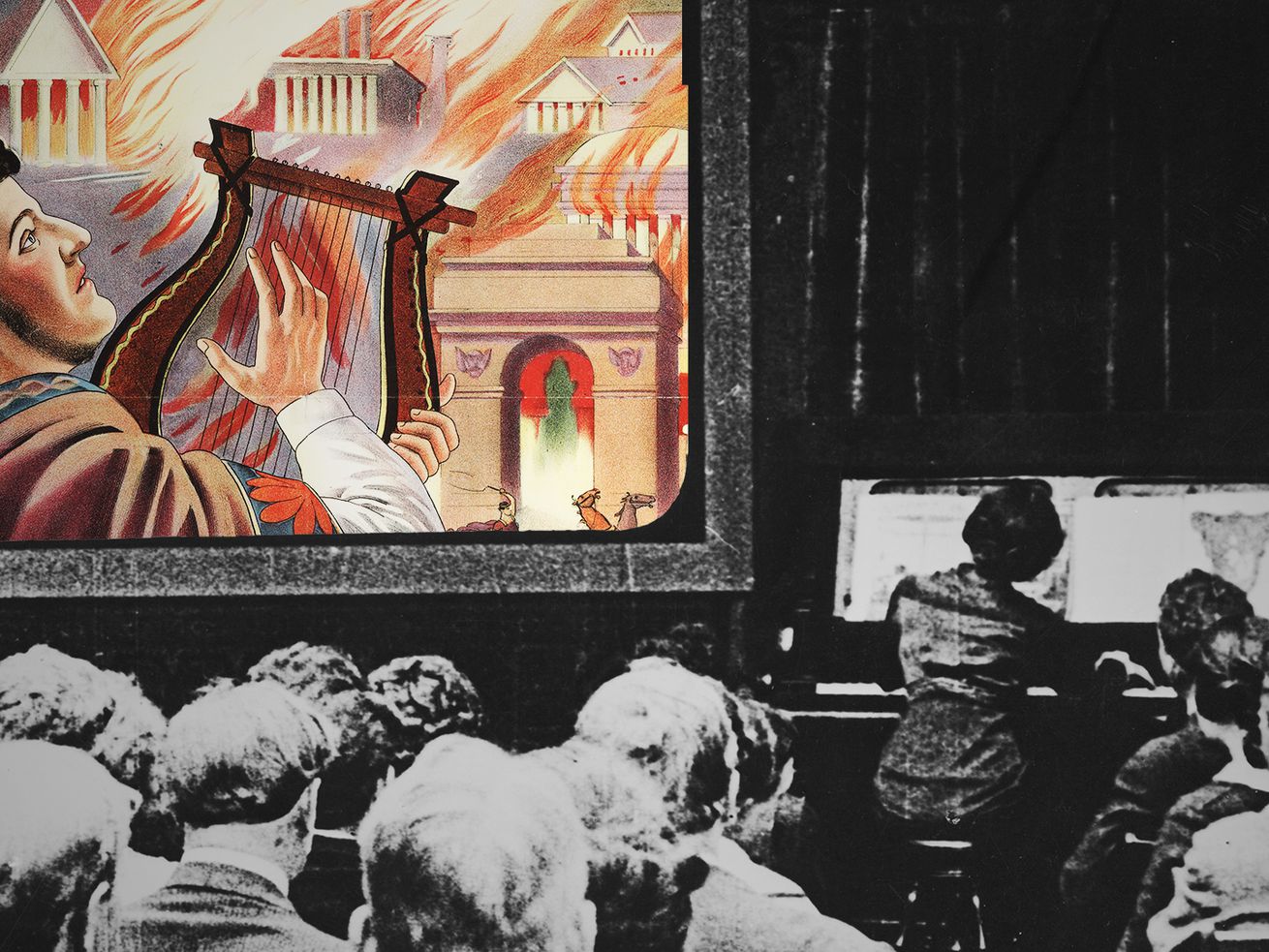
Getty Images/Library of Congress/Vox
Movies were short. How did it change?
Why are movies about two hours long? In this episode of Vox Almanac, Vox’s Phil Edwards researches the history of movies — and discovers the Italian silent film classic that changed all movies forever.
In the 1900s, movies were typically around 15 minutes long — that was the length of one reel (depending on playback speed and a few other variables). But in 1913, that changed significantly thanks to the blockbuster Quo Vadis — a two-hour epic that wasn’t just long, but had blockbuster ambitions.
Quo Vadis involved huge stunts, thousands of extras, and real Roman locations, taking movies to a scale little before seen. When it premiered, instead of playing as one of many short films in nickelodeons, it debuted in big concert halls and other prestigious venues. That led to a record box office and an industry-changing trend that started with D.W. Griffith and spread elsewhere.
You can find this video and all of Vox’s Almanac series on YouTube. And if you’re interested in supporting our video journalism, you can become a member of the Vox Video Lab on YouTube.
A History of Narrative Film by David A. Cook: This book provides a good overview of film history.
Film Before Griffith by John Fell: This book chronicles all the films that influenced movies before D.W. Griffith came on the stage.
The Silent Cinema by Liam O’Leary: O’Leary provides another good overview, this one of the international silent film scene.
The Griffith Project: Many silent films are lost, so anthologies like these, which describe each film and include data on length, are useful.
from Vox – All https://ift.tt/2CYqgEW

Rep. Elise Stefanik, R-N.Y., asks a question during the House Intelligence Committee hearing featuring testimony by Joseph Maguire, acting director of national intelligence, on a whistleblower complaint about a phone call between President Trump and Ukrainian President Volodymyr Zelensky, in Rayburn Building on Thursday, September 26, 2019. | Tom Williams/CQ-Roll Call, Inc via Getty Images
The three-term Congresswoman has emerged as Republicans’ new face of the impeachment hearings.
A “new Republican star” — and Democratic foil — is having a moment during the House Intelligence Committee’s impeachment hearings: Rep. Elise Stefanik.
Stefanik, the only Republican woman on the Intelligence Committee, has established a much higher profile this past month as she takes on a central role in the impeachment process.
Just last Friday, she made waves by using a misleading procedural stunt to accuse Intelligence Chair Adam Schiff of cutting her off — an argument that directly contradicted established House rules. During the same hearing, her pointed questioning of former Ukraine Ambassador Marie Yovanovitch stood out as far more effective than that of ranking member Devin Nunes or Republican Counsel Stephen Castor.
Since the start of the impeachment hearings, Stefanik, one of the youngest women ever elected to Congress, has become an increasingly prominent GOP figure. A longtime moderate who’s pushed back on President Donald Trump about the government shutdown and tax cuts in the past, Stefanik’s rhetoric has become more partisan as it relates to impeachment — and that’s garnered positive feedback from some factions of the party, including the president himself.
“Nothing rises to the level of impeachable offenses,” Stefanik said during a press conference last week. “This is wishful thinking by the Democrats.” Over the weekend, Trump tweeted his compliments:
A new Republican Star is born. Great going @EliseStefanik! https://t.co/9QH4oUa2eg
— Donald J. Trump (@realDonaldTrump) November 17, 2019
Stefanik’s strong Trump backing is likely a strategic play for her reelection campaign in 2020: While New York’s 21st district previously voted for former President Barack Obama, it’s since seen a major swing in favor of the GOP and Trump in recent years.
But it’s also a sign of how polarizing this inquiry has become for both parties, Catholic University political science professor Matthew Green tells Vox. Stefanik’s stance on impeachment underscores just how closely members of the party are tying themselves to Trump during this inquiry — and sets her up as a major target for Democrats in 2020.
Stefanik’s recent performance has garnered widespread praise from GOP lawmakers including House Minority Leader Kevin McCarthy, and of course, the president. In the past two weeks, Trump has mentioned or retweeted posts about her eight times.
But even before the impeachment proceedings, Stefanik was viewed as a young, dynamic member of the party — one who staked out a position that’s closer to the center. Previously, she’s worked on policies such as maintaining funding for rural hospitals and boosting caregiver support for veterans.
“For those of us in New York, it’s not surprising,” says Republican strategist Jessica Proud. “She’s been seen as a real rising Republican star in New York politics.”
Beyond the Intelligence panel, Stefanik currently sits on both the House Armed Services and Education and Labor committees, and she’s led the effort to elect more Republican women to the House even as other members of the party establishment have chafed against this. Last year, Stefanik urged the party to increase the diversity of its representatives and to get engaged at the primary level — clashing with other lawmakers in the process.
When fellow Republican Rep. Tom Emmer called this effort a “mistake,” she had a decisive response: “Newsflash, I wasn’t asking for permission.”
But NEWSFLASH I wasn’t asking for permission.
—>”If that’s what Elise wants to do, then that’s her call, her right…But I think that’s a mistake.”
— Elise Stefanik (@EliseStefanik) December 4, 2018
Stefanik was first elected to Congress in 2014 at the age of 30, beating Democrat Aaron Woolf by double digits for an open seat previously held by a Democratic incumbent. Prior to her election, she worked as a staffer for former President George W. Bush’s administration and was known for her work with former Speaker Paul Ryan, leading his vice presidential debate prep.
“She had never run for office before, beat someone who had run previously and had a lot of money, and really proved her mettle and capabilities when she was a real unknown,” says Proud.
In the years since she’s taken office, Stefanik has focused her policies on the Fort Drum military base in her district, and confronted Trump on multiple issues such as his withdrawal of US troops from Syria.
Stefanik’s willingness to defend Trump during the impeachment process seems to mark a change in tone with her previous breaks, and it also underscores how partisan impeachment has become. In the vote to approve impeachment inquiry procedure, for example, not a single Republican broke with the party and voted in favor of it.
“It shows how the partisan nature of the impeachment hearings make it difficult for lawmakers of either party to take a more moderate or centrist public position,” Catholic University’s Green told Vox, adding that Stefanik’s positions reflected the support of many voters in her district.
Stefanik, meanwhile, argues that her efforts on impeachment don’t contradict her other policy positions.
“I have one of the top 10 percent most bipartisan records in this House and one of the most independent records,” she told the Washington Post. “But when it comes to constitutional matters, we should focus on the facts. We should not let this be a partisan attack the way Adam Schiff is conducting himself.”
Stefanik’s growing role in the impeachment proceedings has catalyzed an outpouring of support from Republicans, and vehement opposition from Democrats ahead of her own race for reelection in 2020.
Following Friday’s impeachment hearing, Stefanik used both social media and a press conference to defend the president and question Schiff over the committee process, even though he was simply adhering to procedure. Standing next to Jordan at the press briefing, she reiterated an argument that was founded on a misrepresentation of the rules, arguing that Republicans were “muzzled” by Schiff.
The focus on Stefanik during Friday’s hearing was also seen by some as a way to diffuse the optics of a predominately male panel scrutinizing Yovanovitch, who faced attacks from Trump during the panel, a suggestion Stefanik rejected in her interview with the Post. Nonetheless, Stefanik’s presence has highlighted how few women there are on the Republican side of the aisle.
“The obvious is that she stands out as a young woman in a party dominated by old white men,” Cook Political Report’s Dave Wasserman said of Stefanik. Democrats, though they have significantly more representation, similarly aren’t close to parity either — just three of the party’s 13 House Intelligence members are women.
Even as Stefanik’s performance in the hearing has prompted praise from conservatives, it’s simultaneously made her a target for Democrats. Wasserman notes that Stefanik is likely in a positive position for the 2020 race, since many of the voters who did not turn out in 2018 — when she won by a 14 point margin — are likely to lean Republican.
“The political reality in her district, despite what Democrats would hope, is that it has shifted in favor of Donald Trump,” he says.
Stefanik’s opponent, Tedra Cobb, meanwhile, has seen strong fundraising off of Stefanik’s ties with Trump and the impeachment inquiry. Cobb raised $1 million in the days since the Friday impeachment hearing.
.@EliseStefanik and the @GOP are using widely debunked attacks against #TeamTedra in an attempt to distract from her recent political stunts.
⬇️Help #NY21 & #TedraCobbForCongress fight back⬇️https://t.co/w0DWfCeoj0
— Tedra Cobb for Congress (@TedraCobb) November 18, 2019
The spotlight on Stefanik and Cobb could direct further resources and attention from both parties to the New York race. At this time, Cook Political Report rates the district as “Solid Republican.”
from Vox – All https://ift.tt/2XsJdZP

Photo by Win McNamee/Getty Images
“Do not worry. I will be fine for telling the truth.”
Lt. Col. Alexander Vindman testified Tuesday that he was concerned about President Donald Trump’s July 25 call with Ukrainian President Volodymyr Zelensky, calling it “improper for the president of the United States to demand a foreign government investigate a U.S. citizen and political opponent.”
That wasn’t a surprise: It’s what Vindman said in closed door-testimony last month.
But what really stood out in Vindman’s public testimony before the House Intelligence Committee was his moving conclusion, where he recounted his military service and own family’s journey to America as refugees from the former Soviet Union nearly 40 years ago.
“When my father was 47 years old, he left behind his entire life and the only home he had ever known to start over in the United States so that his three sons could have better, safer lives,” Vindman told the committee. “His courageous decision inspired a deep sense of gratitude in my brothers and myself and instilled in us a sense of duty and service. All three of us have served or are currently serving in the military. Our collective military service is a special part of our family’s story in America.”
As he prepared for hours of questioning Tuesday — including partisan attacks from Republican defenders of Trump — Vindman convincingly argued that his presence before Congress was part of the American dream.
In Russia, Vindman said, his “act of expressing my concerns to the chain of command in an official and private channel would have severe personal and professional repercussions and offering public testimony involving the president would surely cost me my life.”
For that, he said, he was grateful for his father’s decision to come to the US, and giving him the privilege of being a public servant and United States citizen.
“Dad, my sitting here today, in the US Capitol talking to our elected officials is proof that you made the right decision forty years ago to leave the Soviet Union and come here to the United States of America in search of a better life for our family,” Vindman said in the closing moments of his statement.
“Do not worry. I will be fine for telling the truth.”
Read Vindman’s full opening statement here.
from Vox – All https://ift.tt/342GZD0

 Tim Alexander Dollery