Electronic Cigarette Store Sells Vape Juice Cheap in Sydney NSW

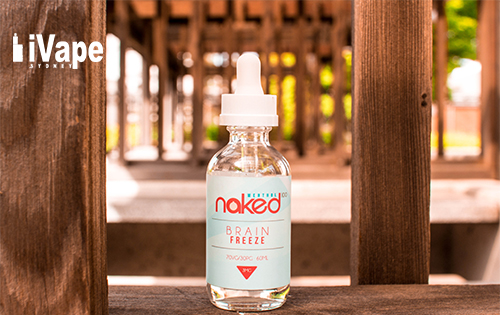
Vaping has become a craze worldwide. And due to its good reviews by researchers and those who have already used it, it is no wonder that smokers, and even non-smokers, have decided that they want to try it out. Many have experienced vaping and are now looking forward to more. But as with most cases, the majority, if not all, of vapers would want their vape juice cheap in Sydney NSW. There are still a lot who would not want to buy e-juices that are expensive and way beyond their budget. 

You Will Find Our Vape Juice Cheap and a Great Alternative to Tobacco

Vape Juice Cheap Sydney NSW, Sydney NSW Vape Juice Cheap, Top Vape Juice Cheap Sydney NSW, Sydney NSW Top Vape Juice Cheap

With smoking being one of the leading causes of death in Australia and all over the world, it has become a New Year’s Resolution for a lot of people to quit tobacco smoking. Although tobacco is legal, it is the reason why one out of two users has succumbed to illnesses when used on a regular basis.

Studies have shown that when compared to other alternatives to smoking, specifically those that still contain nicotine like nicotine patches and nicotine gums, vaping comes out to be the most helpful option. 

Especially when combined with behavioral support, smoking cessation is more successful when using e-cigarettes in contrast to nicotine-filled replacements.

Although many smokers who have quit tobacco smoking still feel the urge to avail themselves of tobacco, they find vaping as a good alternative though initially not as satisfying. However, after getting accustomed to using the e-cigarettes, many smokers have continued to vape as their way of coping with their struggles to remain tobacco-free.

Vaping is the act of inhaling and exhaling vapour, much like a cigarette smoking wherein you inhale and exhale tobacco smoke. Their motions are also similar in the way that they put the device in their mouth like they would a regular cigarette. This habitual gesture is one of the things smokers crave for upon kicking the habit. Vaping simulates this particular set of movements thus still giving the ex-smoker the gratification they yearn for. 

With vape, the users still experience “throat hit”, the satisfaction smokers or vapers’ get when the inhaled smoke or vapour hits their throat. This makes the transition from smoking to vaping much easier.

One of the reasons why smokers are afraid to quit is the resulting weight gain accompanying it. Smokers trying to quit normally substitute sugary snacks for cigarettes. Vaping is a good tool for smoking cessation because it provides you with the enjoyment of the different tastes and aroma without having to take in any calories. You can even choose from different flavours of vape juices, mix and match them if you would like, and still not gain any weight.

Some e-cigarettes have e-juices that contain nicotine. Those who switched to vaping from smoking sometimes use nicotine at the beginning, gradually lowering the dosage and eventually may not even avail of nicotine at all. Or perhaps, they may adjust the level whenever they feel like it. This is a good way to wean oneself from nicotine addiction. Nicotine is more dangerous when being used with regular tobacco cigarettes as there are more toxic chemicals in it when juxtaposed with vaping. But even though this addictive substance is safer with vaping, still be wary, as many stores in Australia do not sell products that contain nicotine. This could also be an advantage as it is good practice not to use nicotine at all.

Another advantageous aspect of vaping is that, in the long run, as compared to smoking, it is much cheaper. Likewise, you do not have to go through the embarrassment of the foul odour of tobacco sticking to you.

Read more:  What is Vaping

Leading Vape Store Sells High Quality Yet Cheap E-Liquids

If you have decided to try out vaping, or are looking for a store that will cater to your every vaping need then it is time to introduce an online vape shop in Sydney NSW, iVape Sydney that you should definitely be going to, it is, after all, a vaper’s heaven, we sell our vape juice cheap without compromising on the quality.

With our great selection of e-juices, as well as vaping tools, you will definitely find something that is of your interest! We stock up on all our products so you would not have to worry about a certain device or e-liquid being sold out. So do not fret, for iVape.Sydney vape store in Sydney NSW has got your back!

So hurry! Click on that “shop now” button and be ready for some unlimited fun! 

Happy vaping!

*Vaping may be as harmful to your health as tobacco cigarettes, please conduct your own research & vape at your own risk.

The following post was first published to Electronic Cigarette Store Sells Vape Juice Cheap in Sydney NSW and is courtesy of iVape.Sydney. See more on:} https://ivape.sydney

Disney says it doesn’t need data to make great shows

Disney’s Kevin Mayer sitting onstage with Recode’s Peter Kafka at the 2019 Code Media conference.

Disney’s Kevin Mayer onstage with Recode’s Peter Kafka at the 2019 Code Media conference. | Tori Stolper for Vox Media

Netflix relied heavily on data to make programming decisions. Disney’s been in the business long enough, it doesn’t have to.

When it comes to deciding what shows and films to create for its new Disney+ streaming service, Disney is relying on its leaders’ creative instincts much more than it’s considering data points.

That’s what Kevin Mayer, chairman of direct-to-consumer and international at Disney, told Recode’s Peter Kafka at the 2019 Code Media conference in Los Angeles on Tuesday, a few weeks after the launch of Disney+. The service debuted with an expansive library that includes its Marvel, Pixar, and Star Wars catalogs, as well as a handful of new and exclusive movies and shows. It’s gradually going to build out its offerings, and it plans to do so prudently. It’s going to consider what the data predicts will play best with audiences — but it won’t be overly reliant on these metrics.

“We might not always follow the data,” Mayer told Kafka. “We might have great, creative ideas that don’t fit right into where the data would point you to make a program, so we’re going to use both our judgment or the ideas we have in place, the capacities that we have in place, and the data that tells us what to make. Certainly, we will be paying attention to that.”

Mayer said he believes it’s a “fallacy” that data can and should be used to make minute-by-minute creative choices. “Creative processes fundamentally don’t yield to that sort of analytical look,” he said.

Implicit in Mayer’s remarks is how heavily Netflix, a pioneer in the streaming space, has relied on data in its programming choices and the shortcomings of this approach. Measures such as Nielsen ratings, box office hauls, and focus groups, which media companies like Disney have long relied on, already inform them about what does and doesn’t resonate with their audiences.

As digital media executives Matthew Ball and Alex Kruglov recently explained on Recode, even Netflix has started to move away from such data-driven creative decisions:

Netflix Chief Content Officer Ted Sarandos has begun to change his tune. In 2015, he admitted that data represented only 70 percent of the decision process, with the judgment 30 percent “coming on top.” In 2018, this had inverted to 70 percent gut, 30 percent data. By 2019, it was 80/20.

Of course, Disney has decades of experience in figuring out what works in entertainment — something Mayer noted on Tuesday. “We make programs that are super popular, so I think we have a good finger on the pulse of what consumers like — or actually love,” he said.

That’s not to say that Disney has all the advantages. Netflix is ahead in terms of the scale of its multinational video quality, and it has a more solid infrastructure in place. “They’ve been doing this a long, long time at a big scale,” Mayer said, though he added he believes Disney “has the best content on the planet.”

“I think we each will end up looking like each other to some degree,” he said of the Disney-Netflix dynamic.

To get there, Disney will need to perfect its technology. On Tuesday, Mayer assured Kafka that the technical issues Disney+ experienced last week when it launched were the result of a “technical detail” in the architecture of the app, rather than a broader structural issue. He added that Disney also experienced some “customer service issues” that compounded the situation.

In the end, Disney’s technical difficulties didn’t seem to matter that much to customers. The day after Disney+ launched, the company said 10 million people had signed up for the service.

from Vox – All https://ift.tt/2KCWdqC

Tuesday’s impeachment hearings were a disaster for Republicans

Ranking member Representative Devin Nunes of Califorina (left), listens as Ambassador Kurt Volker, former special envoy to Ukraine, and Tim Morrison, a former official at the National Security Council, testify before the House Intelligence Committee on November 19, 2019. | Jacquelyn Martin-Pool/AFP/Getty Images

Even their own witnesses said damaging stuff.

In theory, the makeup of Tuesday’s House Intelligence impeachment hearings could have led to a balanced day, with some good news for Democrats and some for Republicans.

The first part of the hearing featured testimony from two witnesses called by the Democrats: Lt. Col. Alexander Vindman, a National Security Council official who listened in on President Trump’s call with Ukraine President Volodymyr Zelensky, and Jennifer Williams, a foreign policy adviser to Vice President Mike Pence. The second part was devoted to two witnesses called by the Republicans: former US ambassador to Ukraine Kurt Volker and former Trump foreign policy adviser Tim Morrison.

But Tuesday’s testimony was, from practically top to bottom, a disaster for the president and his Republican allies.


Caroline Brehman/CQ-Roll Call/Getty Images
Lt. Col. Alexander Vindman, director of European affairs at the National Security Council, leaves after testifying before the House Intelligence Committee on November 19, 2019.

All four of the witnesses confirmed key parts of the overall case against the president — that he twisted US foreign policy into a tool of his reelection campaign by using military aid in an effort force Ukraine into opening an investigation into the Biden family. In one particularly striking example, Volker — one of the GOP witnesses — amended his earlier closed-door deposition to clarify that the administration’s behavior was shadier than he had previously thought.

Meanwhile, the Republicans on the intelligence committee, from ranking member Devin Nunes on down, did not present a consistent and compelling counternarrative. They did little to contest the facts, preferring instead to attack the media, the whistleblower whose complaint kicked off this saga, or the witnesses themselves.

The day underscored the fundamental fact of the situation: Trump did what Democrats are accusing him of doing. The only issue is whether congressional Republicans are willing to punish him for it.

Tuesday’s testimony made Trump look awful

Vindman and Williams were both important witnesses because they listened in on Trump’s now-infamous July 25 call with Zelensky, and both found it concerning. That’s the one where Trump pivots from a discussion of US military aid to Ukraine to asking Zelensky to “do me a favor though:” investigating Burisma, the Ukrainian company that had Hunter Biden on the board, and a conspiracy theory about Ukraine’s role in the 2016 election.

Vindman testified that he raised concerns about the call inside the US government, saying that he interpreted it as an “improper … demand” that “a foreign government investigate a U.S. citizen and political opponent.” Williams said it was “unusual,” unlike any other similar call she had been on because it “involved discussion of what appeared to be a domestic political matter.”


Caroline Brehman/CQ-Roll Call/Getty Images
Jennifer Williams, an aide to Vice President Mike Pence, leaves after testifying before the House Intelligence Committee, on November 19, 2019.

They were two people who heard what Trump said in real time testifying, under oath, that they thought there was something off about it. One is a decorated career military officer, the other a National Security Council staffer who worked for Vice President Mike Pence. It’s exceptionally implausible that Williams and Vindman are out to get Trump, and much easier to believe that they’re government employees who were genuinely worried about the president’s behavior.

Vindman underscored this point in his opening testimony, which included a moving reflection on his immigrant background. He moved here from the Soviet Union at four years old, described himself as committed to serving the country that saved his family from totalitarianism, and at one point directly reassured his father, who brought him to the US, that challenging the country’s leadership was safe.

“Dad, I’m sitting here today in the US Capitol. Talking to our elected officials is proof that you made the right decision 40 years ago to leave the Soviet Union and come here to the United States of America in search of a better life for our family,” Vindman said. “Do not worry. I will be fine for telling the truth.”

Vindman — also an Iraq War veteran with a Purple Heart — is very hard to dismiss as a left-wing Democratic plant.

And Morrison and Volker, the witnesses who were supposed to be good for Republicans, also ended up confirming key parts of the case against Trump.

Daniel Goldman, the Democratic counsel who handled much of the questioning, asked Morrison about a conversation he had with Trump’s ambassador to the EU, Gordon Sondland. Morrison testified that Sondland described another conversation, with Ukrainian official Andriy Yermak, in which he made it very clear that there was in fact a quid-pro-quo on the table.

“[Sondland told Yermak] that the Ukrainians would have to have the prosecutor general make a statement with respect to the investigations as a condition of having the aid lifted,” he said.


Caroline Brehman/CQ-Roll Call/Getty Images
Kurt Volker, former U.S. special envoy to Ukraine, l(eft), and Timothy Morrison, the former senior director for Russian affairs at the National Security Council, are sworn in to the House Intelligence Committee hearing on November 19, 2019.

Volker recalled another moment involving Sondland — a July 10 meeting between US and Ukrainian officials. Previously, Volker had said the meeting was uneventful. But on Tuesday, he amended his testimony to say that Sondland had inappropriately raised the question of “investigations” during the conversation.

“Ambassador Sondland made a generic comment about investigations,” Volker said. “I think all of us thought it was inappropriate.”

This is consistent with testimony from Vindman, who had been at the same meeting and recalled the same sequence of events (he also said then-National Security Adviser John Bolton shut down the meeting in order to cut off Sondland’s inappropriate comments). There were a lot of similarly consistent accounts across the entire day of testimony — and, on the whole, they make the president look really bad.

What’s the Republican defense?

It’s hard to know what, exactly, the overall Republican defense against these allegations was supposed to be.

There were a few effective moments — Rep. Elise Stefanik (R-NY), for example, got the witnesses to say that the Ukrainians did not seem aware at first that aid was being withheld, suggesting this means there could not have been a quid-pro-quo exchange between aid and investigations:

https://platform.twitter.com/widgets.js

This line of question is deeply misleading: once the Ukrainians were made aware of the aid being withheld, it quickly became clear to them that it was being blocked as part of a quid-pro-quo for a Biden investigation. What’s more, aid wasn’t the only quid-pro-quo: there was also a clear offer of a White House visit, which Zelensky very much wanted, in exchange for investigations.

But as a matter of political theater, Stefanik got Republicans some useful soundbites. And that’s pretty much the best of what you could say for the GOP’s efforts. On the whole, it was a pretty bad day for Trump’s allies, who were fighting an uphill battle against the facts as laid out by the witnesses, including witnesses they called themselves.

In some cases, the GOP witnesses directly undercut Trump, as my colleague Andrew Prokop explains:

Volker said that “the accusation that Vice President [Joe] Biden acted inappropriately” with regard to Ukraine “did not seem at all credible to me” — contradicting Trump’s unsupported insistence that Biden acted corruptly in helping push out Viktor Shokin, a Ukrainian prosecutor whom the administration and American allies considered corrupt.

Volker also said that, previously, he drew a distinction between investigating Burisma (the Ukrainian gas company Hunter Biden sat on the board of) and the Bidens. He understood Trump officials were pushing for investigations into Burisma, which he considered appropriate. But “in retrospect, I should have seen that connection differently” — admitting it was inappropriate and “unacceptable,” and targeted at the Bidens.

And Volker said that former Ukrainian prosecutor general Yuri Lutsenko, who has made allegations about the Bidens’ corruption that Rudy Giuliani promoted, isn’t credible. Indeed, Volker even said that he told Giuliani this in private — and that Giuliani agreed. All this debunks a counter-narrative pushed by Trump’s allies, in which the President was legitimately concerned about corruption in Ukraine.

As the day went on, despite a lot of heated rhetoric from Republican members of the committee, especially from Rep. Nunes, there were few coherent substantive challenges to what the witnesses were saying.

Instead, the GOP tried to go after the witnesses themselves — including a notably ugly example when Steve Castor, the Republican attorney in charge of questioning, went after Vindman’s patriotism.

He specifically focused on a job offer Vindman received from Oleksandr Danylyuk, the former head of Ukraine’s National Security and Defense Council. Apparently, Danylyuk offered Vindman an opportunity to become Ukraine’s defense minister three times during the trip — and, each time, Vindman declined.

“Upon returning, I notified chain of command and the appropriate counterintelligence folks about this, the offer,” Vindman said.

But Castor wasn’t satisfied. He continued to press Vindman on whether he ever considered the offer, resulting in an exchange in which he appeared to call Vindman’s patriotism into question:

CASTOR: Ukraine’s a country that’s experienced a war with Russia. Certainly their minister of defense is a pretty key position for the Ukrainians. President Zelensky, Mr. Danylyuk, to bestow that honor — at least asking you — that was a big honor, correct?

VINDMAN: I think it would be a great honor, and frankly I’m aware of service members that have left service to help nurture developing democracies in that part of the world. It was an Air Force officer that became minister of defense, but I’m an American. I came here when I was a toddler. And I immediately dismissed these offers. Did not entertain them.

CASTOR: When he made this offer to you initially, did you leave the door open? Was there a reason he had to come back and ask a second or third time?

VINDMAN: Counselor, you know what, the whole notion is rather comical that I was being asked to consider whether I’d want to be the minister of defense. I did not leave the door open at all.

CASTOR: Okay.

VINDMAN: But it is pretty funny for a lieutenant colonel of the United States Army, which really isn’t that senior, to be offered that illustrious a position.

CASTOR: When he made this offer to you, was he speaking in English or Ukrainian?

VINDMAN: He is an absolutely flawless English speaker.

Castor is arguing that Vindman’s loyalties were strained by repeated job offers from the Ukrainians, highlighting Vindman’s Ukrainian language skills, reminding everyone that he’s foreign-born. The insinuation, that Vindman’s background makes him an unreliable witness to Trump’s malfeasance, is reasonably clear.

Castor never outright brought up Vindman’s Ukrainian origin (or his Jewish background), but he didn’t really need to. The line of questioning served only to suggest that a Ukrainian-born immigrant cannot be trusted to be loyal to the United States even if he was wounded fighting for his country.

The ugly xenophobia of this exchange makes it especially notable. But the bank-shot reasoning behind it — Vindman got a job offer from the Ukrainians that he turned down, so maybe we can’t believe his testimony? — was pretty par for the course.

If these are the best defense Trump’s allies can muster, then they really won’t have much cover against charges of naked partisanship of a vote against impeachment.

from Vox – All https://ift.tt/2NZJtMG

Vox Sentences: California vs. carmakers

Bill Pugliano / Getty Images

California’s government boycotts automotive companies in an emissions standards dispute; rape charges against WikiLeaks’s founder dropped in Sweden.

Vox Sentences is your daily digest for what’s happening in the world. Sign up for the Vox Sentences newsletter, delivered straight to your inbox Monday through Friday, or view the Vox Sentences archive for past editions.

California narrows its car shopping list

  • California’s state government will no longer purchase motor vehicles from automotive companies that refuse to recognize its authority to set emissions standards. [KTLA 5]
  • Earlier this month, several carmakers, including Toyota, Fiat Chrysler, and General Motors, took the White House’s side in an ongoing battle over whether California can set its own emissions standards. [Vox / Umair Irfan]
  • By revoking California’s ability to regulate vehicles’ tailpipe emissions, a crucial source of air pollution, the White House set up a consequential fight over federalism and environmental protection. [New York Times / Coral Davenport]
  • Along with 22 other states, California is suing the federal government over the decision. [The San Francisco Chronicle / Dustin Gardiner]
  • California spent over $133 million on vehicles from companies participating in the Association of Global Automakers, the carmakers’ group, between 2016 and 2018 — including electric vehicles like the Chevy Bolt. [Reuters / David Shepardson]
  • But the state agency will now be purchasing Ford, Honda, BMW, and Volkswagen cars instead, after those automakers agreed to recognize Californian emissions standards. [Bloomberg / Emily C. Dooley]
  • California will also stop purchasing gas-powered sedans as a part of the larger initiative, championed by Gov. Gavin Newsom, to reduce emissions in the state. [The Sacramento Bee / Sophia Bollag]
  • Both of these policies will take effect on January 1, 2020. [CNBC]

Assange no longer faces rape charges in Sweden

  • Rape charges against WikiLeaks founder Julian Assange were dropped today in Sweden. [The Guardian / Ben Quinn]
  • Assange was charged with sex offenses in 2010 and attempted to avoid those charges by hiding out in the Ecuadoran Embassy in London in 2012 until about two months ago, when he was evicted. [Washington Post / William Booth and Karla Adam]
  • Throughout the investigation, Assange maintained that the charges were unfounded and, while he sought asylum in the London-based embassy, the Swedish government paused the investigation due to the inability to properly interview Assange. [BBC]
  • WikiLeaks editor-in-chief Kristinn Hrafnsson tweeted that the dismissal of charges against Assange opens up a window to pursue Assange’s main concern: “the belligerent prosecution of the United States and the threat it poses to the First Amendment.” [Politico]

Miscellaneous

  • Pew Charitable Trusts released a report that suggested following the lead of some cities and states combating climate change by taking it to their developers. [New York Times / Christopher Flavelle and John Schwartz]
  • ABC will host a Jeopardy special that pits some of the all-time highest earning contestants against each other to determine the “Greatest of All Time” champion. [USA Today / Gary Levin]
  • Walmart looks to return to the Arkansas town it hails from and build a walkable, sunshine-filled headquarters that doubles as a town square. [Curbed / Patrick Sisson]
  • Why “OK boomer” is more than just the newest retort of young people to the older generation. [Vox / Aja Romano]
  • South Dakota’s newest campaign against drugs has a slogan that is generating laughs and some controversy. [NBC News / Tim Stelloh]

Verbatim

“We look forward to providing all the support we can to Kevin and Tim and their families.”

[American University of Afghanistan statement about the release of professors Kevin King and Timothy Weeks from Taliban custody since 2016]


Listen to this: Impeachment TV

The House impeachment inquiry just had its biggest day yet. It was so big Today, Explained couldn’t fit it all into one episode. [Spotify]


Read more

The GOP counsel’s xenophobic attack on Vindman’s patriotism

2 jail workers face criminal charges in Jeffrey Epstein case

A clever new solar solution to one of the trickiest climate problems

Cats’ new trailer is here. It’s very Cats.

The attacks on Vindman’s military uniform, explained

from Vox – All https://ift.tt/2D1ni2k

Public hearings begin in Trump impeachment inquiry

House Intelligence Committee Continues Open Impeachment Hearings

Photo by Shawn Thew – Pool/Getty Images

Several witnesses are testifying in public hearings in November.

In November, the impeachment inquiry entered a new phase: public hearings. The House Intelligence Committee, led by committee chair Rep. Adam Schiff, has called several witnesses to testify in the inquiry, including several Trump administration and State Department officials like Marie Yovanovitch, George Kent, Bill Taylor, Kurt Volker, Gordon Sondland, and others.

Some of these officials are witnesses who reportedly heard President Trump’s controversial July phone call that led to the impeachment inquiry, while others are State Department officials and US diplomats who are experts on Ukraine.

Here, you’ll find updates on the hearings, including schedules, recaps, key takeaways from each hearing, and a guide to who’s who, what’s happening, and what really matters. To get started, you can read more about what to expect in the hearings here. You can also catch up on what to know about impeachment with our guide to impeachment, explained.

from Vox – All https://ift.tt/2QxdxRt

Nunes keeps referring to the impeachment hearing as a “drug deal.” It’s not as clever as he thinks.

Impeachment Hearing

Nunes during Tuesday’s impeachment hearing. | Tom Williams/CQ-Roll Call/Getty Images

He thinks he’s owning the libs. He’s really owning himself.

On two separate occasions during Tuesday’s impeachment hearings, House Intelligence Committee ranking member Devin Nunes (R-CA) derisively referred to the impeachment inquiry as a “drug deal” — a turn of phrase meant to depict Democrats as being up to something illicit.

https://platform.twitter.com/widgets.js

The comment is part of Republicans’ broader push to portray the entire impeachment inquiry as a partisan witch hunt. But while Nunes may think that by saying this he’s owning the libs, he’s actually owning himself.

“Drug deal,” if you recall, was the memorable turn of phrase then-National Security Adviser John Bolton originally used to describe the efforts of US ambassador to the EU Gordon Sondland and Rudy Giuliani to leverage the Ukrainian government into doing political favors for Trump.

My colleague Alex Ward detailed the backdrop of Bolton’s “drug dealer” remark late last month, when news broke that Bolton was in talks to testify before impeachment investigators. And suffice it to say the context doesn’t reflect positively on Trump’s Ukraine policy:

In her testimony last week, former National Security Council Director for European Affairs Fiona Hill recounted a July 10 meeting with senior Ukrainian officials that she, Bolton, and US ambassador to the EU Gordon Sondland attended. Per her statements, Sondland brought up the investigation, leaving those in the room with no doubt that he wanted the Ukrainians to look into the Bidens.

Bolton afterward told Hill to speak with top NSC lawyer John Eisenberg about his own discomfort with what Sondland said and the Ukraine plan he, Giuliani, and acting Chief of Staff Mick Mulvaney were executing.

“I am not part of whatever drug deal Sondland and Mulvaney are cooking up,” Bolton told Hill, according to the New York Times reported last week. Apparently, Bolton was already upset at Rudy Giuliani, the president’s personal lawyer, for leading his own policy to Ukraine outside official channels. “Giuliani’s a hand grenade who’s going to blow everybody up,” Hill recalled Bolton saying in a previous conversation.

So by repeatedly bringing up the “drug deal,” Nunes is in effect reminded people that even top Trump administration officials had concerns about the shadow Ukraine policy that was being run by Giuliani and Sondland. It’s a bizarre tactic for one of Trump’s staunchest defenders in Congress.

Then again, other parts of Nunes’s performance during Tuesday’s hearing indicated that his heart isn’t really in it.

https://platform.twitter.com/widgets.js

Nunes’s performance on Tuesday may shed some light on why Trump-defended attack dog Jim Jordan (R-OH) was recently added to the intelligence committee, with the Los Angeles Times reporting at the time that “some Republicans have privately questioned whether Nunes is prepared for the role” of leading the hearings.

But, in fairness, it’s hard to defend the nearly indefensible. And shortly before Nunes’s second “drug deal” remark, one of the Republicans’ witnesses — Tim Morrison, the former top National Security Council official for Russia and European affair — outlined more clearly than any other witness that the Trump administration held up military aid to Ukraine as part of an effort to strongarm the Ukraine government into publicly opening investigations of the Bidens and of conspiracy theories aimed at showing that Russia did not in fact interfere in the 2016 election.


The news moves fast. To stay updated, follow Aaron Rupar on Twitter, and read more of Vox’s policy and politics coverage.

from Vox – All https://ift.tt/2KD7UgP

Vape Juice Supplier Darwin | Call us Now (02) 9597 4080 iVape…

Vape Juice Supplier Darwin | Call us Now (02) 9597 4080 iVape Sydney is a vape and eLiquid / eJuice supplier to both public and wholesale customers. For more information, visit our website – https://ivape.sydney/ . We service to the following areas: Adelaide, Brisbane, Canberra, Darwin, Hobart, Melbourne, Perth & Sydney.

How bad right-wing journalism helped kick off the impeachment saga

A portion of a call record is displayed on a monitor as Ambassador Kurt Volker, former special envoy to Ukraine, and Tim Morrison, a former official at the National Security Council, testify before the House Intelligence Committee on Capitol Hill in Washington, DC on November 19, 2019. | Jacquelyn Martin / POOL / AFP

A pro-Trump smear campaign by the president’s lawyer led to a “perfect” phone call and a whistleblower.

During an impeachment hearing Tuesday, Republican Rep. Devin Nunes praised the reporting of a “veteran investigative journalist” whose work had proven to be a “problem for the Democrats” and the media.

That journalist is John Solomon, formerly of the Hill and currently a Fox News contributor. Republicans like Nunes have relied on Solomon’s work during the impeachment inquiry to build the case that Trump was right to be concerned about former Vice President Joe Biden’s actions in Ukraine and those of his son, Hunter Biden, and to argue that the “real” scandal is how the Obama administration tried to get the Ukrainian government to cover up corruption.

But Solomon’s “journalism,” particularly on the subject of Ukraine, has been proven to be false, repeatedly. Solomon did not immediately respond to a request for comment.

Substantial reporting from outlets including ProPublica and the Daily Beast show that Solomon spread disinformation about Democratic presidential candidate Joe Biden and the former US Ambassador to Ukraine, Marie Yovanovitch. In his work, he effectively laundered dirt provided to him by Donald Trump’s attorney, Rudy Giuliani, producing articles that directly led to a whistleblower report alleging that Trump, based on Solomon’s false assertions, demanded the Ukrainian government investigate the Bidens or risk losing military aid.

The foremost allegation made by Solomon was published by the Hill in March, when Solomon interviewed the former Ukrainian prosecutor Yuri Lutsenko. In the interview, he accused then-US Ambassador to Ukraine Marie Yovanovitch of giving him a do-not-prosecute list to stop investigations into corruption. The accusation was proved false, and was ultimately recanted by Lutsenko himself — but by then, it was too late.

The falsehood had made it into the right-leaning media ecosystem, where other false allegations surfaced, like that Yovanovitch was anti-Trump and told Ukrainians to ignore him because he would soon be impeached. She was fired from her post in May of this year.

https://platform.twitter.com/widgets.js

Trump was seemingly laser-focused on Yovanovitch, even referencing her in his infamously “perfect” call with Ukrainian President Volodymyr Zelensky as being “bad news.” But Yovanovitch’s real crime appears to have been standing in the way of Rudy Giuliani, and, more importantly, his efforts to investigate Joe Biden on behalf of the president’s reelection efforts, according to statements made by the former mayor to the Wall Street Journal.

As Republicans continue to dig in on impeachment, Solomon represents a media figure with mainstream credentials those supportive of Trump can use to burnish their views and their defenses of the president. But ironically, it’s Solomon, and Solomon’s misinformation stemming from Giuliani and others, that is responsible for the impeachment inquiry in the first place.

Solomon’s conspiracy theories came from Rudy Giuliani and his allies

This spring, John Solomon, then the executive vice president of digital at the Hill, posted an interview with former Ukrainian Prosecutor General Yuri Lutsenko, whom Solomon introduced as a “hero” who spent two years in prison for battling Russian “aggression.”

But that interview was actually part of a long-running smear campaign by Giuliani aimed at undermining the Ukrainian ambassador to help Trump.

As my colleague Andrew Prokop reported:

According to the accounts of other witnesses who have testified in the impeachment inquiry, Yovanovitch was highly respected among her colleagues. But she ran afoul of two powerful people: Trump’s personal lawyer Rudy Giuliani and Ukraine’s prosecutor general (under the previous administration) Yuri Lutsenko.

In an apparent effort to win President Trump’s favor, Lutsenko and Giuliani began discussing the possibility that the Ukrainian prosecutor general could launch investigations into Trump’s enemies. He’d investigate Burisma (the Ukrainian natural gas company whose board included Hunter Biden) as well as purported Ukrainian interference in the 2016 US presidential election.

But Yovanovitch got in the way. When Lutsenko asked the US embassy to set up meetings with FBI or Justice Department officials, she objected, saying that’s not the typical way these things are handled. Instead, she encouraged him to meet with the FBI’s legal attaché in Kyiv. “I don’t think he really appreciated it,” she told investigators.

Solomon’s interview made a blockbuster (and false) assertion: Yovanovitch had given Lutsenko a “do-not-prosecute” list that included a founder of an anti-corruption group, Anti-Corruption Action Centre (AntAc). That group, according to Solomon, was funded by Hungarian-American billionaire (and conservative boogeyman) George Soros.

Solomon wrote that “the implied message to Ukraine’s prosecutors was clear: Don’t target AntAC in the middle of an America presidential election in which Soros was backing Hillary Clinton to succeed another Soros favorite, Barack Obama, Ukrainian officials said.”

But there was no “do-not-prosecute” list, which Lutsenko himself admitted a few weeks later. AntAc was funded by a host of entities, including donations from Ukrainian citizens and the European Union; the United States; the governments of the United Kingdom, the Netherlands, and the Czech Republic; alongside the Open Society Foundations, a Soros-developed grantmaking group. Lutsenko didn’t spend time in prison in retaliation for his efforts against Russia — he was sent to prison for embezzlement and abuse of office, two years before Russia became making incursions into Ukraine.

And in other articles for the Hill, Solomon made more false assertions about perceived enemies of Trump.

For example, he wrote that Joe Biden had pressured Ukraine to remove former Ukrainian Prosecutor General Viktor Shokin in order to shut down an investigation into Burisma, a Ukrainian energy company whose board included Biden’s son, Hunter Biden. Those allegations were turned into a 30-second attack ad for the Trump campaign on Facebook, viewed more than five million times. But former Ukrainian President Petro Poroshenko said that Biden’s demand for Shokin’s firing was not at all improper — and Biden was hardly alone in wanting Shokin, who was reportedly engaged in corrupt behavior, removed.

Solomon further wrote that a so-called black ledger that showed off-the-books payments made to former Trump campaign manager Paul Manafort by a pro-Russian political party — payments that resulted in Manafort’s resignation from the campaign — was fake. But that ledger is absolutely real.

In summary, Solomon falsely asserted that Democrats worked with Ukrainian officials to help spread falsehoods about Trump campaign officials and quash investigations into Joe Biden’s son, and that Yovanovitch had kept Ukrainian officials who might blow the whistle on the alleged scheme from entering the country. But none of that was true.

Solomon’s work relied heavily on information fed to him by Rudy Giuliani, who orchestrated, in the words of senior State Department official George Kent, a “campaign … full of lies and incorrect information” aimed at getting rid of Yovanovitch by connecting her to George Soros and a conspiratorial effort to help Hillary Clinton win the 2016 election — a theory that Former National Security Council official Fiona Hill told Congress earlier this month seemed based on the falsehood that “George Soros rules the world and, you know, basically controls everything.”

Giuliani sent a host of memos containing misinformation to Solomon. As Jeremy Peters and Kenneth Vogel of the New York Times detailed:

In an interview, Mr. Giuliani said he turned to Mr. Solomon earlier this year with a cache of information he believed contained damaging details about Mr. Biden, his son, Hunter Biden, and the special counsel Robert S. Mueller III’s investigation of Russian interference in the 2016 election. “I really turned my stuff over to John Solomon,” Mr. Giuliani said. “I had no other choice,” he added, asserting that Obama-era officials still “infected” the Justice Department and wouldn’t have diligently investigated the information he had compiled.

“So I said here’s the way to do it — I’m going to give it to the watchdogs of integrity, the fourth estate,” he said.

Giuliani’s interest in smearing Yovanovitch centered on her refusal to permit a politically motivated investigation into the Bidens. But Giuliani also worked with two Ukrainian businessmen, Lev Parnas and his partner, Igor Fruman, to spread disinformation about Joe Biden and Yovanovitch, and they had motivations of their own.

As detailed by the New York Times in October, “Mr. Parnas and Mr. Fruman boasted that they had worked with Mr. Giuliani to force the recall this spring of the American ambassador to Ukraine, Marie L. Yovanovitch,” partly because Parnas believed Yovanovitch was getting in the way of his work in the oil industry. (Both have recently been indicted on campaign finance charges.)

Remember that Solomon interview with Lutsenko, in which Lutsenko said that he had received a “do-not-prosecute” list from the American ambassador? Parnas set up the interview, and according to ProPublica, watched the interview from the control booth.

More concerningly, Solomon was introduced to Parnas by his personal attorneys, Joe diGenova and Victoria Toensing, who had worked with Giuliani previously and, according to Fox News, were helping the former New York City mayor “to get oppo research on Biden.”

It was diGenova who was the source of the smear against Yovanovitch regarding her “anti-Trump” status, saying on Sean Hannity’s Fox News show in March, “The current United States ambassador Marie Yovanovitch has bad mouthed the president of the United States to Ukrainian officials and has told them not to listen or worry about Trump policy because he’s going to be impeached.” More recently, he’s claimed that George Soros controls a majority of the State Department.

When Solomon wrote that piece alleging that Yovanovitch had given Lutsenko a “do-not-prosecute” list, he sent a draft first, to three people: Parnas, diGenova, and Toensing.

https://platform.twitter.com/widgets.js

As a result of investigations into the validity of Solomon’s work, Solomon’s columns were shifted from “news” to “opinion” in 2018. The editor-in-chief of the Hill announced Monday that his work is now being reviewed, “updated,” and in some cases, corrected by the paper’s staff. And members of Congress have decried his work as having “no veracity whatsoever.”

But Solomon stands by his stories, and even told Fox News he was considering “targeted legal action” against those who criticize him.

“Notorious for massaging facts”

Controversy isn’t exactly new for Solomon, whose previous reporting at larger outlets seems to have focused on “blockbuster stories” that lacked blockbuster facts. Or as the Washington Post’s then-ombudsman Deborah Howell put it, “a ‘gotcha’ without the gotcha.”

One example: when he wrote a front-page story for the Washington Post in 2007 about the sale of former Democratic vice-presidential candidate John Edwards’s home. One Washington Post reader said of the story, “I read it three times and could not figure out why it was a news story, let alone a front-pager. What’s worse was that the placement, the headline and the tone of the story clearly implied that former senator Edwards had done something sleazy.”

As the Columbia Journalism Review detailed in 2012:

As a reporter for the AP and The Washington Post, he dug up his share of genuine dirt, but he also was notorious for massaging facts to conjure phantom scandals. In 2006, for instance, Solomon and fellow AP writer Sharon Theimer tried to tie now-Senate Majority Leader Harry Reid to disgraced super-lobbyist Jack Abramoff. The piece hinged on a series of meetings Reid had with Abramoff’s staff to discuss a pending minimum-wage bill and gifts from Abramoff associates who opposed several casino-expansion projects. What it failed to mention is that Reid stuck to his longstanding position on both issues—meaning that any implications of influence peddling were bogus.

Solomon’s career in journalism saw him at the Associated Press and the Washington Post in the 1990s and early 2000s before he became editor-in-chief of the Washington Times. There, he tasked himself with making the conservative-leaning newspaper the Washington Times more “objective;” using the term “gay” instead of “homosexual,” for example.

In 2008, he told the Washington City Paper of his work at the Washington Times, “The only point I have made with the reporters and editors who write for the news pages is there must be a bright line between opinion and editorializing that rightfully belongs on the op-ed and commentary pages and the fair, balanced, accurate, and precise reporting that must appear in the news sections of the paper.”

Solomon left the Washington Times in 2009 over financial issues, but returned in 2013 after a time spent as executive editor at the Center for Public Integrity — a tenure marked by no small degree of controversy, particularly over Solomon’s efforts to turn the Center into a daily reporting outfit (one that would pay a firm run by Solomon roughly 4 million dollars a year in commission, based on that firm’s projections).

But Solomon had a real talent for boosting traffic and getting attention, which became his focus when he left the Washington Times to go to Circa, a mobile news app that shut down in 2015 before being relaunched that same year by Sinclair Broadcasting Group, a right-leaning company perhaps best known for requiring outlets to run specific pro-Trump promotional segments.

Solomon became Circa’s chief operating officer. It was at Circa where Solomon gained the attention of some of the right’s biggest names, like Sean Hannity, for reporting alongside Sara Carter on how Michael Flynn was mistreated. Or how the “real” Russia investigation should focus on collusion between Hillary Clinton and the Department of Justice and alleged anti-Trump bias in intelligence services.

That line of argument didn’t gain him much credence among many journalists — one conservative writer told me that Solomon was “known to have credibility issues” that required readers to find a secondary source for any of his scoops. But in 2017, he joined The Hill, a paper that launched in 1994 and describes itself as “the newspaper for and about Congress, breaking stories from Capitol Hill, K Street and the White House.” I reached out to the editors at the paper, and will update if and when I hear back.

At The Hill, Solomon’s work continued to focus on “exclusive” stories that tended to fall apart under scrutiny, like the Uranium One allegations against Hillary Clinton, or ones that weren’t very exclusive at all, like a piece alleging that an attorney had “sought donor cash” for two women who accused Trump of sexual harassment (the attorney in question, Lisa Bloom, had set up a public GoFundMe for one of the alleged victims, which is not unusual).

But it was Solomon’s work on Ukraine — work based largely on misinformation given to him by Rudy Giuliani and associates of Giuliani, including his own attorneys — that made the biggest impact. Because it was that work that led to a whistleblower complaint focused on allegations that Trump, working with Rudy Giuliani, was “pressuring [Ukraine] to investigate one of the President’s main domestic political rivals” by withholding military aid.

In the White House’s partial transcript of a July 25 call between President Donald Trump and Ukrainian President Volodymyr Zelensky, Trump refers directly to assertions made by John Solomon:

If you could speak to him that would be great. The former ambassador from the United States, the woman, was bad news and the people she was dealing with in the Ukraine were bad news so I just want to let you know that. The other thing, there’s a lot of talk about Biden’s son, that Biden stopped the prosecution and a lot of people want to find out about that so whatever you can do with the Attorney General would be great. Biden went around bragging that he stopped the prosecution so if you can look into it… It sounds horrible to me.

https://platform.twitter.com/widgets.js

Despite it now being called into question, John Solomon’s work remains an issue, in large part because it is still taken as fact among some right-leaning pundits and, clearly, the president himself.

On Friday, for example, conservative pundit Glenn Beck alleged that Yovanovitch should be “held for perjury” when she asserted during sworn testimony that she did not give Lutsenko a “do-not-prosecute” list. His source?

“Award-winning investigative journalist John Solomon.”

from Vox – All https://ift.tt/2s032Ms
One of the Republicans’ witnesses confirmed a quid pro quo on TV

Former National Security Council Senior Director for European and Russian Affairs Tim Morrison testifies before the House Intelligence Committee in the Longworth House Office Building on Capitol Hill November 19, 2019 in Washington, DC. | Chip Somodevilla/Getty Images

This may be the biggest moment in the impeachment hearings so far.

A former top White House official just outlined a quid pro more clearly than any other witness in the public impeachment hearings so far — and it’s devastating to Republicans’ defense of President Donald Trump.

Under questioning from Democrats, Tim Morrison, the former top National Security Council official for Russia and European affairs, was asked to recall a September 1 conversation between US Ambassador to the EU Gordon Sondland and Ukraine official Andriy Yermak. That discussion has become central to the question of whether US military assistance to Kyiv was conditioned upon Ukraine opening investigations into former Vice President Joe Biden’s family and other Democrats.

According to Morrison, it clearly was.

“What did Ambassador Sondland tell you that he told Mr. Yermak?” Democratic counsel Daniel Goldman asked Morrison. Morrison replied, “That the Ukrainians would have to have the prosecutor general make a statement with respect to the investigations as a condition of having the aid lifted.”

In other words, there was a quid pro quo. To get roughly $400 million in aid to help fend off a Russian invasion, Ukraine needed to assist Trump in his 2020 presidential ambitions by opening a probe into Burisma, a Ukrainian gas company on whose board Hunter Biden — Joe’s son — sat. Not only that, the government in Kyiv would have to announce the opening of the investigation.

This isn’t entirely new. Previous testimony by witnesses in closed-door depositions — including by Morrison himself — confirmed this general story. Those revelations led Sondland, who will testify on Wednesday in an open session, to revise his previous statements that there was no quid pro quo.

But it’s one thing to have this in closed-door testimony, and another for Morrison to say it on national TV. It’s a soundbite that confirms the entire thrust of what Democrats are after, and it’s very hurtful to the Republican case that the administration wasn’t trying to pressure Kyiv to help the president politically — even though Morrison says he doesn’t think the president did anything illegal.

from Vox – All https://ift.tt/37klXBD

The Morning Show’s producers say many of its critics are “Apple haters”

Executive producers Mimi Leder and Kerry Ehrin onstage at Code Media in Los Angeles on November 19, 2019. | Tory Stolper

Some negative reviewers may have made up their minds before watching the show, executive producers Mimi Leder and Kerry Ehrin said onstage at Code Media in Los Angeles.

Being the flagship show of Apple’s new original TV content platform, Apple TV+, comes with a lot of attention — and some serious haters, according to its showrunners.

The Morning Show, which debuted on Apple TV+, is a series about a morning news TV show set in the Me Too era. The producers of the show, Mimi Leder and Kerry Ehrin, talked onstage at Recode’s Code Media conference about the challenges of launching a high-profile show on a new service, and some of the mixed critical reviews it’s received.

“When those reviews came in, I didn’t know what show they were watching. And I just kind of thought they were nuts,” said Leder, director and executive producer of the show, who is known for her previous work on shows like ER and The West Wing. “I just felt there were a lot of Apple haters and wanting Apple to fail.”

For The Morning Show, some of the negative press started before the show even aired as disputed reports came out about the reported cost of the show and its shifting focus in light of real-world sexual harassment allegations against former Today host Matt Lauer.

The duo also spoke to CNN’s Dylan Byers about the daunting task of feeling like the fate of a tech giant’s brand-new project is in your hands.

“There are certain weak moments where I’m like, ‘How did I get responsible for this?’” said Ehren. “It’s slightly intimidating. I try not to think about it too much.”

On the positive side, the showrunners said that Apple has given them more creative freedom than they’ve ever had before. Ehren, an award-winning former producer for hit shows like The Wonder Years and Friday Night Lights, said she tries not to worry about the reviews and ratings too much, as it can distract from her craft.

“We’re focused on the story we’re telling, the characters. We’re inside of it. So when you see reviews that are looking at it from the whole business aspect, like, ‘What is Apple doing?’ and, ‘They spent this much money on it’ — it’s kind of separate from us.”

“The good news is that people love the show, and we love the show, and that’s what matters,” said Leder.

from Vox – All https://ift.tt/35l8wjo

Design a site like this with WordPress.com
Get started