The economic debate over the minimum wage, explained

A 2017 protest in New York City for a $15 an hour minimum wage. | Erik Mcgregor/Pacific Press/LightRocket via Getty Images

There’s still disagreement. But it looks like in many cases, pay raises swamp any lost jobs.

For at least the last 25 years, labor economists have been compiling reams of evidence trying to answer one big question: Do minimum wage laws cost us jobs?

In introductory economics courses, students are typically taught that setting price floors — on milk, oil, or labor — causes supply to exceed demand. In the case of labor, what that means is that if there’s a minimum wage, employers’ demand for workers falls (because they cost more), and the supply of workers increases (because they’re promised more money) — meaning there’s unemployment, with all the costs and suffering that entails.

For a long time, that’s how the theory went. But in 1993, economists Alan Krueger and David Card brought hard data to bear on the question and published a groundbreaking paper that forced economists to reconsider the issue.

They surveyed more than 400 fast-food restaurants in New Jersey and eastern Pennsylvania to see if employment growth was slower in New Jersey following an increase in the minimum wage. They found no evidence that it was.

Card and Krueger expanded their results into a well-regarded book, Myth and Measurement (1995), and the empirical literature on the question exploded after that.

In the ensuing quarter-century, economic research has put to rest what had been a fundamental assumption — that low minimum wages always cause major disemployment in the short run. Instead, researchers have discovered a gamut of results. Some have found real employment effects (if short of seriously disruptive effects as previously assumed), but a new evidence review finds that most studies have found small or no effects.

The comprehensive review of the evidence on minimum wages, conducted by Arindrajit Dube for the British government, seeks to summarize the current evidence base, a quarter-century after Card and Krueger’s pioneering work. Dube, a professor of economics at UMass Amherst, is one of the leading experts on the effects of minimum wage laws within economics, and his research has typically found small employment effects, if any, from the policy.

In his new paper, Dube finds that the average effect on employment across the studies he reviews is very close to zero — that is, in most of the high-quality studies he reviews, a few outliers aside, the number of jobs cost by minimum wage laws is negligible. They raise wages without much downside.

The review also builds on a paper in the Quarterly Journal of Economics by Dube, Doruk Cengiz, Attila Lindner, and Ben Zipperer that examined 138 different changes in the minimum wage from 1979 to 2016. The paper found that on average, “overall number of low-wage jobs remained essentially unchanged over the five years following the increase.” Moreover, the paper identifies a macroeconomic quirk in the late 1980s/early 1990s that, once accounted for, helps resolve some disagreement in the literature.

The paper certainly doesn’t put to rest the debate over minimum wage studies. Skeptics remain. There is still disagreement about the scale of employment effects, and about what new minimum wage laws setting minimums as high as $15 an hour could do.

We also don’t know everything about why minimums don’t seem to cause a huge amount of job loss. Firms seem to pass on some of the costs to consumers, and in some cases have “monopsony” power: if employees have only a handful of potential employers to choose from, those employers can get away with paying workers less, because they have fewer exit options.

In some ways, this is the most vital research field at the moment. “It’s much more interesting to think of the minimum wage as a flashlight into the labor market than to always wind up debating the employment effect,” Suresh Naidu at Columbia says.

But we do know a fair bit more than we did in 1993, and the evidence we have now suggests that in many cases minimum wages are a net good for workers — even if a few workers lose jobs, those costs are significantly outstripped by increased wages for workers who keep their jobs. Whether that will remain true with minimums of $15 or more, especially in rural areas, remains to be seen.

What the new evidence review says

Dube’s new review was conducted at the request of a surprising source: the Conservative government of the United Kingdom. The Conservative cabinet has proposed gradually raising the country’s minimum wage to £10.50 an hour (about $15) by 2024, whereas Labour wants to raise it to £10 an hour ($14.28) immediately. In sharp contrast to the US, the debate there is about the speed and level of minimum wage increases, rather than on whether or not they occur at all.

Dube thus focuses heavily on the UK’s own experience launching a national minimum wage in 1998, exactly 60 years after the US set a national minimum. But he also reviews the evidence in the US, including more recent studies in cities like Seattle, Chicago, Washington DC, Oakland, San Francisco, and San Jose, as well as studies examining minimum wage increases in Hungary and Germany. Dube collects 55 estimates of the minimum wage’s impact on employment across the world, including 36 estimates from the US, and two estimates for the US and UK that he produced for the report.

Throughout he seeks to estimate the “own-wage elasticity” (OWE) in each context: the increase in wages for a given group caused by an increase in the minimum wage, divided by the change in that group’s probability of employment caused by the minimum wage increase. An OWE of negative 1, for instance, is a “break-even” number: If wages for, say, fast food workers rise 10 percent following a minimum wage increase, then an OWE of -1 suggests odds of employment would fall 10 percent in turn.

The median study looking at a broad group of low-wage workers estimates an “elasticity” of -0.04; that is, a 25-percent increase in average wages for a given group due to a minimum wage increase should lead to a 1 percent decline in employment for that group. That’s a really small effect, and one that suggests the benefits of a modest minimum wage hike should swamp the costs.

Chart: “Own-wage employment elasticities from the minimum wage literature”
Arindrajit Dube, University of Massachusetts Amherst, National Bureau of Economic Research and IZA Institute of Labor Economics

Studies looking at smaller groups of workers more likely to be bound by a minimum wage, like teenagers, find bigger effects: if you include studies looking at any size of group, the average OWE is -0.17. But that still implies that disemployment effects are swamped by higher wages.

That evidence base is enough for many labor economists, like Harvard’s Larry Katz, to conclude that we know reasonably well that modest minimum wage increases do more good than harm. “I’ve had many students on both sides of these debates,” Katz says. “When [minimum wages] affect non-traded goods sectors, which is largely true in the US, they clearly increase the wages for low-wage workers impacted. They seem to have very modest impacts on employment.”

The evolution of minimum wage studies

Dube’s review is the latest salvo in a contentious debate that has evolved in interesting directions. When modern minimum wage research began in the 1990s, there were two dominant approaches.

One approach, pioneered by Card and Krueger, compared border counties in neighboring states, one of which increased the minimum wage and one of which didn’t. The other, used by UC Irvine’s David Neumark and the Fed Board of Governors’ William Wascher, tracked employment in full states over time, to see if employment fell in the wake of a minimum wage increase. The two methodologies tended to get different results: Card and Krueger, of course, found no employment effects, while Neumark and Wascher tended to find substantial job loss following minimum wage increases.

Each approach, however, had drawbacks. Card and Krueger’s approach focused on one specific case — New Jersey’s minimum wage hikes — that might not generalize to the country as a whole. The minimum wage increase also might have forced Pennsylvania employers to raise their wages in response, which could make Pennsylvania a bad control group: it’s not unaffected by the minimum wage increase in New Jersey, it’s also affected.

The Neumark/Wascher approach, by contrast, relied on comparisons between states that might otherwise be very different. There are a million reasons why, say, employment might have grown more slowly in California following a minimum wage increase than in Arizona. Neumark and Wascher generally used few “control” variables in an effort to keep the comparison clean and avoid “over-controlling” and accidentally ignoring effects that are due to the minimum wage, but critics argued this could lead them to erroneously blame the minimum wage for job losses that were totally unrelated.

The varying approaches could lead to different evidence reviews drawing quite different conclusions. A 2007 paper by Neumark and Wascher concluded that the “most credible” studies found that the minimum wage costs a substantial number of jobs. Meanwhile, a paper by Dale Belman and Paul Wolfson first published in 2015 found that most credible research estimates minimal effect on jobs.

One thing that happened between 2007 and 2015 is that economists devised better methods. Researchers led by Dube have pioneered a new method of border-county comparisons that extends nationally: starting in a 2010 paper, Dube, T. William Lester, and Michael Reich compared “all contiguous county-pairs in the United States that are located on opposite sides of a state border,” a vast expansion of the general Card-Krueger approach. That creates a much larger sample and enables a nationwide study, rather than one limited to just, say, New Jersey.

That study found no noticeable effect on employment. It also tested for spillovers — an increased minimum wage in one state raising wages in the state next door — and found they were negligible.

More recently in their 2019 Quarterly Journal of Economics paper, Dube, Cengiz, Lindner, and Zipperer find that much of the disagreement between the Card/Krueger and Neumark/Wascher approaches is attributable to a quirk in the late 1980s and early 1990s. During that period, blue states experienced an economic downturn relative to red states that predated the biggest blue state minimum wage increases; that made it look like minimum wages were lowering employment growth, when what was really happening was that blue states both had lower employment growth and separately increased their minimum wages.

“In our QJE paper we showed that the specifications under argument (lot of controls, little controls) actually all suggest little job loss in the post 1995 period; and that this appears to be driven by the quirky 80s boom/bust,” Dube told me. “None of us knew this until recently. This is actually progress.”

What skeptics argue

But new research arguing for substantial disemployment effects has emerged too. Jonathan Meer of Texas A&M and Jeremy West of UC Santa Cruz in a 2016 paper found that while short-run employment isn’t affected by increases in the minimum wage, states that raised their minimums saw slower job growth in subsequent years.

This makes some intuitive sense: you might expect a coffee shop that sees its wage minimum rise from $9 to $12, say, to not actively lay off any employees, but to hire fewer people in the future. Meer and West argued that focusing on employment levels, rather than rates, produced much of the disagreement in the literature up to that point, because it made estimates sensitive to what trends in employment existed before the minimum wage increase.

This led to a fierce back and forth between Meer and West and Dube. Dube in a 2013 study argued that the job growth slowdown in Meer and West showed up disproportionately in manufacturing, where wages are too high to be affected by the minimum wage, suggesting that their model picked up some noise that wasn’t related to the minimum wage at all — and added that using his methodology to look at employment growth, you didn’t find any effects at all.

Meer and West countered that when you add appropriate controls, the industries seeing slower job growth aren’t weird or surprising; a recent paper by Doruk Cengiz using machine learning to decompose the employment effects that Meer and West discuss suggests they’re mostly among higher-wage individuals, which bolsters Dube’s critique.

Another skeptic, UC San Diego’s Jeffrey Clemens, had one paper included in Dube’s review. Written with Michael Wither, it estimated significant job losses due to the 2007 increase in the federal minimum wage amidst the Great Recession.

Clemens argues that other important studies did not get sufficient emphasis in Dube’s review. He names, for instance, a paper by MIT’s John Horton where an online labor market — it’s not Amazon’s Mechanical Turk, but that’s a good comparison — randomly imposed minimum wages for some firms posting jobs, and not others. The firms with minimums reduced hiring and hours worked, pivoting away from low-productivity workers to high-productivity ones. That’s a true experiment, and one that suggests some disemployment effects.

Clemens also points to a Danish study examining youth employment. Denmark’s union-negotiated minimum wages kick in at age 18, and, sure enough, the study finds that employment drops by a third when 17-year-olds turn 18, suggesting large-scale unemployment due to a minimum wage.

Dube actually did include this one in his study, but notes it’s a very different policy from a broad-based minimum wage. “Employers can costlessly substitute higher paid, slightly older workers for identical but lower-paid, slightly younger ones,” in Denmark, he says. “There is very clear reason why you’d expect more job loss in this context, but there is no equivalent for this for, say, a broad based minimum wage policy.”

The online and Denmark studies use extremely credible designs that are arguably better than most of the cross-border or cross-state comparisons that dominate minimum wage research. But they lack “external validity”: it’s not clear that an online task marketplace is a good model for the US labor market, to say the least, and the Denmark example has the problems that Dube notes.

Fight for $15 minimum wage protest
Photo by Erik Mcgregor/Pacific Press/LightRocket via Getty Images
Several of workers protest for a $15 minimum wage near a McDonald’s in New York City, February 13, 2017

A $15 minimum wage

Another study that Dube includes in his review deserves special comment.

Seattle, Washington was one of the first major cities to vote to gradually increase its minimum wage to $15 an hour, and the University of Washington has been conducting a large-scale ongoing study to see what effect that hike has. The most recent report from the study suggests that increasing the minimum to $13 an hour reduced work hours, but raised wages by enough that low-income workers as a whole were better off on average. That doesn’t mean that all low-income workers were better off, though, and the study suggests that many had to find work outside Seattle to supplement their incomes.

An earlier study from the project found much larger negative effects on employment. That study came under intense criticism for data limitations (it doesn’t include employers with locations both in Seattle and outside, because the part of Washington outside of Seattle serves as the control group). The effects it estimated were extremely large relative to other studies in the literature, and many labor economists like Harvard’s Lawrence Katz don’t find the research reliable. “The Seattle study is completely uninformative because there’s no comparison group for Seattle,” Katz says. “It’s the fastest growing labor market we’ve basically ever seen.”

Reliable or not, the Seattle studies have gotten outsized attention because they represent the first wave of studies on the new mega-increases in the minimum wage following the Fight for $15 movement. California, DC, Illinois, Maryland, Massachusetts, New Jersey, and New York are all gradually increasing their minimums to $15 an hour; even more rural/lower-wage states like Arkansas, Maine, and Missouri are gradually increasing their minimums to $11 or $12.

Dube notes in his review that the best evidence we have suggests minimal job impacts on minimum wages of up to 60 percent of the median wage. The median hourly wage in El Centro, California is about $15.50, meaning the $13 an hour minimum (effective January 1 of next year) is over 80 percent of the median wage there. The effects there might be very different.

Dube addresses this concern in his review, noting that a recent study looking at counties that have already raised their minimum wages to over 80 percent of the median wage still found minimal effects.

But there’s sure to be additional research as the new wages are phased in, and everyone in the debate, from Dube to Meer, thinks there’s some point where the disemployment effects become too large. What we don’t know is if any wage increases passed to this point will reach that level.

“Most of the $15 minimum wage proposals are phased in over multiple years and are probably like $11/$12 today,” Katz notes. “If you told me we’re going to $15 tomorrow I would worry about low-wage states. If you told me over five, six, seven years, I’m not super-worried.”

Clemens and AEI’s Michael Strain are doing precommitted studies on the minimum wage — where they agree to use a certain kind of analysis ahead of time — to ensure they don’t change analytical method to get a specific result later. So far they’ve found mixed results, with bigger job losses from bigger increases and little effect from smaller increases in the minimum wage. And they’re hardly the only ones who will be looking.

This debate will rage for a while

It’s easy to become pessimistic about the prospect that new research can dissolve old disagreements. Economists Zubin Jelveh, Bruce Kogut, and Suresh Naidu have found that you can predict, pretty accurately, most economists’ views on whether the minimum wage costs jobs based on their existing political leanings.

That doesn’t mean that the researchers working on the question are dishonest — everyone agrees that Dube, Neumark, etc. are all incredibly smart conscientious researchers who just happen to disagree on this topic. But it does reflect that there are structural forces at work here. There are big monied interests opposed to minimum wage increases, and smaller but real monied interests (specifically unions) supportive of them, and that political economy naturally leads to a polarized knowledge base over time.

“You’ve got to make some normative judgments, which make economists really uncomfortable,” Strain says. Is it worth accepting a risk of higher disemployment for higher wages overall — which seems to be a reliable result of minimum wage increases? How high a risk of disemployment are you willing to accept so that the workers who don’t get laid off get raises?

At this point, personally, I think the trade-off at most margins suggests a higher minimum wage is a good idea. As Dube’s review suggests, most estimates of the employment elasticity aren’t close to -1, despite some studies finding effects in that range. That’s a wonky way of saying that even if employment falls, it falls by less than wages rise by, and as such the benefits for low-wage workers seem to swamp any employment effects.

I’ve very open to that changing as minimums get higher. But we do seem to have learned something very important since the initial Card/Krueger wave: the old assumption that minimum wages are always unacceptably distortionary doesn’t really hold water. They’re often beneficial and at what point they stop being beneficial is something we can test empirically rather than relying just on theory.

Sign up for the Future Perfect newsletter. Twice a week, you’ll get a roundup of ideas and solutions for tackling our biggest challenges: improving public health, decreasing human and animal suffering, easing catastrophic risks, and — to put it simply — getting better at doing good.

from Vox – All https://ift.tt/2CYAUvd

Welcome to The Highlight’s Happiness Issue

Jordan Kay

What we might learn from other cultures, the explosion of positive psychology, why women are growing more unhappy, and how to spend to maximize joy.

The news was dire.

This spring, despite our best efforts — despite all that yoga and meditation and therapy and astrological consultation and turmeric and that slightly worrisome addiction to self-affirming memes — levels of happiness in the United States dropped for the third straight year, according to the World Happiness Report, the United Nations’ annual barometer of global good times. In the country rankings, America slumped to 19. Now it is sandwiched below Canada, and safely above France.


The data on happiness is sparse, and the metrics by which we’re measured new; the World Happiness Report was introduced less than a decade ago and cobbles together survey answers to arrive at its results. But it illuminates a truth: We are failing at the thing so fundamental to Americanness that we made its pursuit a cornerstone of our founding document. If there is a happiness nadir, this seems to be it.

So in this issue of The Highlight, Vox’s home for features and longform journalism, we’re looking closely at the notion of being happy.

Are we woefully limited in our definition of well-being, and could a few words from other cultures help? And how did the ideas of resilience, achievement, and “flourishing” become benchmarks for happiness in just 20 years since the field of positive psychology was born?

We also look at how experts say you can spend money to enhance your general levels of well-being (trust us: spend to save yourself time) and investigate why women’s happiness continues to lag behind men’s — in a comic.

By shining a light on the universal struggle to ease our growing dissatisfaction, maybe we can lead to a little more well-being in the world.


An animated illustration of words in various languages, including nirvana, ubuntu, hygge, and happy.
Jordan Kay

American happiness is plummeting. Could a few words change that?

A psychologist claims that learning “untranslatable words” from other cultures may be a key to being happy. I experimented on myself to see whether it’s true.

by Sigal Samuel


Gaye Gerard/Getty Images

Happiness psychology is a booming industry. But is it science, religion, or something else?

Just over 20 years old, the field of positive psychology has captivated the world with its hopeful promises — and drawn critics for its moralizing, mysticism, and commercialization.

by Joseph Smith


Aubrey Hirsch

The other gender gap

After decades of women’s rights gains, why are women less happy?

by Aubrey Hirsch


Illustration of a stack of one hundred dollar bills with a yellow smiley face pin over the portrait of Benjamin Franklin.
Zac Freeland/Vox

How to spend money to squeeze more joy out of life

Simply having a lot of it won’t automatically increase your sense of well-being. “But using it well can,” says one expert.

by Laura Entis


from Vox – All https://ift.tt/37jtdOd

American happiness is plummeting. Could a few words change that?

A psychologist claims that learning “untranslatable words” from other cultures may be a key to being happy. I experimented on myself to see whether it’s true.

The Highlight by Vox logo

“Happiness is a butterfly which, when pursued, is always just beyond your grasp, but which, if you sit down quietly, may alight upon you.”

Screw that.

The saying, sometimes attributed to the novelist Nathaniel Hawthorne, cautions us to not pursue happiness aggressively; we’ve got to just let it come to us. But for many of us today, such 19th century romantic musings seem quaint, if not downright un-American.

The pursuit of happiness inscribed into the Declaration of Independence has grown into a national obsession. We compulsively compare ourselves to others, asking whether they’re happier than we are and why, and then we buy — a yoga studio membership, an empowerment seminar, an $80 Goop water bottle with a built-in rose quartz crystal — to stop losing the competition.

I admit that I, too, zealously hunt down happiness these days. I’ve had a rough couple of years. My dad had a heart attack. My apartment was burglarized. My knees were gripped by chronic pain so intense that, for a while, I could barely walk.

So when I stumbled across the work of Tim Lomas, I pounced on his books, butterfly net in hand. A lecturer at the University of East London, Lomas specializes in a field known as positive psychology, the study of what makes human beings happy. Not just happy in the narrow sense, like the fleeting joy you get from ice cream, but in the broader sense of human flourishing — what the ancient Greeks called eudaimonia. Positive psychologists research which factors are the biggest contributors to well-being, from income level to relationships to religiosity.

Lomas has recently published a trio of works on the connection between well-being and language: The Happiness Dictionary, Translating Happiness, and Happiness Found in Translation, his illustrated chapbook published this fall. In them, he says most of us in the West aren’t as happy as we could be, in part because we have a limited definition of happiness. Other cultures have concepts of well-being that are vastly different from ours, but because they’re expressed in languages we don’t understand, Lomas argues, we’re missing out on the insights they embody.

So in 2015, Lomas started the Positive Lexicography Project, a crowdsourced treasury of global terms of well-being, everything from fjaka (Croatian for “the sweetness of doing nothing”) to ubuntu (Zulu for “a spirit of universal kindness and common humanity: I am because you are”).

With the help of far-flung strangers on the internet, he’s since mined 140 languages to come up with a whopping 1,200 words. Each has its own unique shades of meaning not fully captured in English translation. He argues that engaging with these “untranslatable” terms can help us imagine, and ultimately experience, more types of well-being.

And a sense of well-being seems to be in short supply in the US. Americans are only becoming more miserable, according to the World Happiness Report. In 2019, the US dropped in the rankings for the third year in a row, coming in 19th place. Experts blame the decline on various factors, including the deadliest drug overdose crisis in our history, ever-higher levels of anxiety in annual surveys, and decreased trust in politicians and other public figures.

Against this backdrop, it’s easy to understand why the emerging field of positive psychology has grown popular both in academia and among the public. And given that the American hunt for happiness is turning out to be pretty unsuccessful, it’s not surprising that proposals such as Lomas’s — which suggest turning to other cultures for insight — exert a seductive pull.

When I called Lomas at his home in London, he told me one of his favorite words is wabi sabi, which is Japanese for “imperfect, weathered, rustic beauty.” The term puts him in a different frame of mind, letting him see things with new eyes.

“Right now I’m looking out at my garden,” he said. “There’s some broken pots there. So I’m thinking, is there a way to look at these pots in such a way that, even though they’re imperfect and old, I see there really is a beauty to them?”

Words like these are tantalizing because they’re so much more than just single words — they’re lexical powerhouses that seem to contain entire worldviews. They let us see how other cultures parse their experiences, offering us more options for how we might understand and live ours.

“In positive psychology, interventions might involve recalling a positive experience and writing about it for 20 minutes, or just sitting and meditating on it,” Lomas said. “With wabi sabi, you could send people away for 24 hours and say, ‘Try and notice this wherever possible and keep a diary on those experiences.’”

Psychologists have adopted a term for the ability to distinguish between feelings in an extra-nuanced way: They call it “emotional granularity.” For example, English has words like pleasure, satisfaction, and pride, but they don’t allow you to differentiate between the pride you feel for a friend whose accomplishment you’re also a tad jealous of, and the pride you feel for a friend whom you’re genuinely, 100 percent happy for. Yet Hebrew has a word for the latter — firgun — which describes total ungrudging and overt pride in another’s success. And German has a word for the opposite of firgun: schadenfreude.

Several studies suggest that increasing emotional granularity is good for our mental and physical health. It makes us more aware of our subjective experiences, which in turn makes it easier for us to regulate our emotions and maintain equanimity. It’s a souped-up version of what we do with preschoolers: We teach them to identify their feelings — “I’m mad” or “I’m sad” — which is the first step toward learning how to manage them.

Lomas says we should try doing the same thing as adults but with untranslatable words, so that we add ever more complexity to our emotional vocabularies. Writing in Translating Happiness, he says he’d want to see “a pilot study, followed by larger-scale empirical testing, randomized controlled trials, replication studies, and meta-analyses. These studies could use psychometric scales to assess the extent of improvement.”

Although I’m in no position to conduct a scientific study, I felt a certain frisson (that’s French for “a spine-tingling shiver of excitement”) when I read this. I wondered what would happen if I picked a few untranslatable words and tried to cultivate the types of well-being they embody.

I knew I had no hope of feeling my way into these words the same way they’d be experienced by someone who’s spent a lifetime steeped in the cultural tradition that gave rise to them. For me to try to access these words outside of their original context would inevitably be to impoverish and distort them. Still, I wondered if spending a little time trying to learn from them would make it possible to experience the world just a bit differently.

I began to plan my experiments.


An animated illustration of the word “duende” and a woman dancing.

As a teenager, I used to dance salsa and flamenco. But recently? Not so much. Over the past few years, a chronic pain in my knees that no doctor could explain or treat kept me from dancing. Which is to say, it kept me from the activity that helped get me out of my head and into my body, that replaced worry with sensation. Happily, this year the pain finally subsided, and so I figured it was time to give duende a shot.

Duende is Spanish for a heightened state of passionate emotion that you experience through art, especially dance. The poet Federico García Lorca said having duende is “not a question of skill, but of a style that’s truly alive: meaning, it’s in the veins … it burns the blood like powdered glass, it exhausts, it rejects all the sweet geometry we understand.” And according to Lomas, “The term derives from a magical elf-like creature in Spanish mythology, which suggests the nonrational and otherworldly nature of the mental state duende signifies.”

One weekend, I saw online that a club near my house was hosting a Cuban dance party. The party didn’t start until 11 pm and my elder-millennial friends could not be corralled off their couches at such an ungodly hour. So I went alone, figuring I’d do fine.

Nope. Not fine at all. Everyone there was intimidatingly fantastic at salsa dancing! The men’s footwork was so fast that their shoes blurred into invisibility; the women were all hips, dresses describing sexy circles in the air as they spun. I stood with my back pasted to the wall and guzzled rum.

Eventually, I forced myself to find a partner and hit the dance floor. As he cut confidently through the air, I felt like a penguin in his arms, flightless and waddling pathetically. My confidence level did not rise over the next few hours. Each dancer was somehow better than the last, and I was way too self-conscious to feel the passionate, out-of-your-mind ecstasy of duende. It’s hard to feel mystically transported when you’re worried about stepping on some hot guy’s toes.

And although I hated to admit it, the quote attributed to Hawthorne did seem to be on-point: Trying to manufacture joy can make it even harder to access.

It was 2 am when, pasted to the wall again, guzzling water this time, I finally met someone as clueless as I was. I asked him how it was that everyone there was an amazing dancer. “Didn’t you know?” he asked. “These are professionals. Half of them own their own studios in the area.” I exploded into laughter. How did I pick the one club in town where everyone was a goddamn dance instructor?

Knowing that helped me loosen up. The guy and I danced together, laughing at ourselves. I started to actually have fun. We spun each other around. We tangoed across the floor. We jumped onto the sides of pillars and kicked off from them, flying, however briefly, through the air. It was not really duende, but it was a joy I hadn’t experienced in a long time.


The underlying premise of Lomas’s work is the Sapir-Whorf hypothesis — a theory, proposed by linguist Edward Sapir in 1929 and later developed by his student Benjamin Whorf — that our language shapes what we’re capable of thinking and feeling. The strong version of the hypothesis, linguistic determinism, holds that you can’t experience a feeling the same way if you don’t have a word for it. Linguists critiqued that view heavily in the 1960s and ’70s, and it remains unpopular these days.

But a milder one, linguistic relativity, is still embraced by some scholars, including Lomas. It holds that language influences experience but doesn’t determine it.

Even linguistic relativity is controversial, though. Some linguists, like John McWhorter, insist that “the world looks the same in any language” — and argue that claiming otherwise risks fetishizing some cultures (“Italians are a romantic people”) and demeaning others. I share some of that concern. As a woman of color whose family hails from India, Iraq, and Morocco, I’m always wary of ideas with the potential to Orientalize or exoticize. At the same time, I wanted to engage with Lomas’s ideas in good faith.

If you find it hard to believe that engaging with untranslatable words can actually increase your well-being, Lomas told me, consider sati. That’s a Pali word from India that you may have seen translated as mindfulness, though many meditators prefer to leave it untranslated, saying the English term is too cerebral to capture the emotional and ethical valences of the original. (Sati also has a very different unrelated meaning among some Indians and Nepalese.)

In the West, sati has been popularized by people like Jon Kabat-Zinn, a scientist who founded the Center for Mindfulness and who in the 1970s developed an eight-week course for people in clinical settings, which he called mindfulness-based stress reduction. Other American teachers, such as Jack Kornfield and Tara Brach, have brought mindfulness practice sessions to the masses. Countless mindfulness apps have also embedded the concept firmly in our cultural lexicon. Lomas points to the rise of sati as evidence that Westerners can study an untranslatable phenomenon, create exercises for cultivating it, and through that measurably improve people’s well-being.

“People looked into sati and built a set of practices around it. That’s been so valuable,” Lomas told me. “Surely there are various other words you could explore in a similar way.”

But by and large, people haven’t yet done that. He’s currently collaborating with scholars in Spain and Japan to see if they can come up with exercises that will help people develop an experiential understanding of untranslatable terms.

Yet just as you need many, many hours of practice to develop mindfulness as a permanently altered trait rather than a temporarily altered state, cultivating different types of well-being will require more than a single exercise to make a meaningful difference in people’s lives.

It will also require that Westerners expand our notion of happiness. Some types of well-being, Lomas writes, don’t come in purely pleasurable packets — they’re ambivalent, containing both positive and negative valences. Think of the Italian word magari, which suggests a sense of “maybe, possibly,” the wistful hope of “if only.” Or the Amharic word tizita, which means “a bittersweet remembrance and longing for a time, person, or thing gone by.” Lomas writes:

Psychologists are increasingly appreciative of such feelings, as seen in an emergent body of work that my colleagues and I refer to as “second-wave” positive psychology. When positive psychology was initiated in the 1990s, it defined itself by focusing on positive emotions and qualities. Before long, however, scholars started to critique this foundational [Western] concept of the “positive.”

While [the value of ambivalent feelings] has been recognized within Western academia only relatively recently, many cultures have long since acknowledged their significance.

Lomas says Eastern cultures, in particular, have a wealth of richly ambivalent words.


An animated illustration of “mono no aware.”

Mono no aware is a Japanese term for appreciating the transiency of life and its beauty, or recognizing that some things are beautiful in part because they’re impermanent.

“The prevalence and importance of mono no aware in Japanese culture may be attributed in part to the influence of Zen, the branch of Buddhism that flowered in Japan from the 12th century onward,” Lomas writes. “Mono no aware is an aesthetic approach to the cognizance of impermanence, which is central to Buddhist teaching.”

Soon after I read this, I learned about a nearby Zen Buddhist silent meditation retreat. Its theme was liberation from the fear of impermanence. It was meant to cultivate “wordless awareness,” which meant no speaking, no phones, no music, and no books. The idea of being without words for a whole weekend freaked me out, but I signed up anyway.

Liberation from fear of impermanence was something I could really use. Ever since my dad had a heart attack three years ago, I’ve been imagining his death and worrying excessively about when it will happen — What if he goes into cardiac arrest while I’m on a trip overseas and I can’t get back to him in time? Maybe I shouldn’t go on overseas trips! — and how I’ll cope.

When I arrived at the retreat, 20 participants wearing sweatpants and kind smiles — mostly retirees grappling with the looming prospect of their own death — sat in a circle. The retreat leader said we’d be working through the “Touchings of the Earth,” a series of exercises designed by Thich Nhat Hanh, a Zen Buddhist monk famed for his teachings on mindfulness. The leader told us he would read three phrases, and after each one, we’d prostrate ourselves on the ground, where we’d lie for five minutes in contemplation.

I felt a bit uncomfortable about the prostrating bit because that’s not really part of my cultural lexicon, but before I knew it, he was intoning the first phrase: “Touching the earth, I connect with ancestors and descendants of both my spiritual and my blood families.”

Down I went with everyone else. Pretty soon, I realized the benefits of lying flat-out on my belly. It humbled me. And it let me imagine myself as a straight line through time, my feet in the past, my hands stretching into the future. I found myself thinking of my Indian great-great-grandmother, an orphan who at age 13 was sent on a rickety train from Calcutta to Bombay to marry a man three times her age.

I thought of all the choices she made to shield her son from violence and poverty, and how they filtered down through the generations, eventually conditioning the choices my dad made for me. All these choices were still shaping my life in palpable ways: my geography, my class, my psychological makeup. I was just starting to think about how my own choices will shape the lives of my potential future children when a bell rang and everyone stood up.

“Touching the earth, I connect with all people and all species which are alive at this moment in this world with me.”

This time I thought of climate change. I pictured all the species we’re losing, trying to visualize each bird, each bee. Now I was a horizontal line, connecting outward to other beings in the present, feeling how precarious they are. The bell rang; everyone stood.

“Touching the earth, I let go of my idea that I am this body and my lifespan is limited.”

Maybe because I’d just imagined myself as an infinite line, stretching out first vertically, then horizontally, it was surprisingly easy to let go of my notion of self as a bounded thing. If my great-great-grandmother’s choices were shaping the lives of my potential future children and my action or nonaction was shaping the lives of birds millions of miles away, what sense did it make to consider myself a separate individual?

As we repeated this exercise over the three-day retreat, I felt open and raw, a crustacean without her shell: soft everywhere. I realized I’d been scared of the prospect of my dad dying in part because I’m scared that his individual mind will no longer be able to speak to me, comfort me, or advise me with any real particularity. I’d hated the notion of his him-ness evanescing into some anonymous flow of consciousness, a drop of water that loses its identity in the ocean.

By the end of the retreat, I didn’t come to completely embrace that notion or magically lose all my fear. What I felt was subtler; I simply feared and hated a little less. Maybe it wasn’t so bad for our particular identities to be transient, if we continue to communicate with everyone and everything through the choices we’ve made. Maybe, as mono no aware suggests, there was even a bit of loveliness to it.


Even as happiness in the US has been decreasing, countries around the world have become more committed to studying, tracking, and increasing their citizens’ well-being.

Amid the global financial crisis, national happiness became the subject of policy conferences and college courses. France commissioned a study on it, which leading economists — Amartya Sen, Joseph Stiglitz, and Jean-Paul Fitoussi — completed in 2009. In 2011, the Organisation for Economic Co-operation and Development released its first well-being report on its member countries, and in 2012, the UN began releasing its annual World Happiness Report.

Several countries are now explicitly focused on boosting well-being. There’s Bhutan, which in 2008 enshrined “gross national happiness” in its Constitution. There’s the United Arab Emirates, which in 2016 appointed a minister of state for happiness. And there’s New Zealand, which earlier this year released the world’s first-ever “well-being budget.” To measure progress toward increased well-being and inform policy, the government there will use 61 indicators tracking everything from loneliness to water quality.

That’s important, because government decisions — and major social problems like racism — do a lot to condition and constrain the types of happiness citizens can access. Political and social change are crucial for increasing well-being; the onus can’t and shouldn’t fall squarely on the individual.

But the machinery of policy grinds slowly, and many individuals want to feel happier now. That’s where Lomas’s ideas may be useful.

Of course, people looking to boost their happiness will find countless other recommendations out there. Many claims stemming from the $4 trillion “wellness” or “self-care” industry — that vaginal jade eggs can fix your hormone levels, say — are not evidence-based. But some other techniques are backed by research. For instance, Laurie Santos, a psychologist who teaches a Yale course on happiness (the university’s most popular class ever), has explained the efficacy of activities like gratitude journaling. Research has also shown that strong social relationships are crucial to well-being; anything we can do to reduce the toxic effects of loneliness is probably going to yield major dividends.

By comparison, how effective is Lomas’s language-learning intervention likely to be?

It’s an empirical question to which we don’t have an answer because it has barely been studied. (My own personal study, with a sample size of one, is nothing like a rigorous scientific trial.) It’s also a question that’s difficult to answer because Lomas’s proposal is actually many proposals. It involves cultivating a plethora of different positive experiences. Plus, you can cultivate them in different ways — and which way you choose matters.

“If Lomas’s intervention involves writing in a journal, that may overlap a lot with gratitude journaling,” said Katie Hoemann, a doctoral candidate in psychology at Northeastern University who researches the interaction between language and emotion. “And if you’re doing the intervention in a social context, you’re probably getting social benefits, too.” The variables may be difficult to isolate.

Hoemann sounded a note of skepticism about the emotional granularity assumption underlying Lomas’s proposal. She noted that although studies have indeed shown a link between emotional granularity and better behavioral control in the face of negative feelings, the evidence that increasing granularity ups positive feelings is much thinner.

Janet Nicol, a professor of linguistics, psychology, and cognitive science at the University of Arizona, cast doubt on Lomas’s claim that learning untranslatable words may improve our well-being. “That kind of claim is just not supported by the evidence so far,” she said. “I think he’s overstating the effects.”

She imagined an experiment to test the hypothesis: Teach a bunch of people the Chinese principle of feng shui, have them rearrange the furniture in their homes accordingly, give them a well-being survey before and after, and measure the extent of improvement. “But in that case, is it the language that’s important or is it just the idea?” Nicol asked. “I don’t think they have to learn the foreign term feng shui in order to learn the idea.”

Nevertheless, Hoemann suggested there’s something here that merits serious investigation, because having a specific word for something does help us identify it. “It might seem like a small individual act to learn new words. But if there are many individuals doing it, there’s a snowball effect and it actually becomes part of our culture.”

In the meantime, people are still suggesting more words for Lomas’s online lexicon. He’s noticing trends in the types of well-being they tend to harp on — groupings that he thinks may reveal something about what human beings find most vital these days. When I asked him what theme is coming through strongest, he replied immediately: our relationship to nature.


An animated illustration of “dadirri.”

The word dadirri, used in several Australian Aboriginal languages, describes a respectful deep listening to the natural world, a receptive state that can be healing. Lomas quotes Miriam-Rose Ungunmerr-Baumann of the Ngangikurungkurr tribe, who explains, “When I experience dadirri, I am made whole again. I can sit on the riverbank or walk through the trees; even if someone close to me has passed away, I can find my peace in this silent awareness.”

Although I was under no illusion that I’d be able to experience dadirri as Ungunmerr-Baumann does, I thought I might try to explore it in Maryland’s Chesapeake Bay, where I spent a few days in October.

One morning, I woke up before dawn and went outside. I purposely brought no phone, no people, no distractions. As the sun rose, I sat on a rock and tried to listen. At first I heard only the loud birds who seemed to be in charge of screaming the world’s pain: Ow! Ow! Ow! Owwwwwww! Ow!

Slowly I began to hear subtler sounds. The water lapping at the land. The occasional swish of a fish breaking the surface and flumping back into the bay.

Each time I heard that flump, I swiveled around trying to see the fish that had produced it — until I realized that by the time you can turn your head, you’ll already have missed it. Better to keep your eyes focused on one patch of water, watching and listening.

Sure enough, several minutes later I was rewarded for my attention by the sight of a great dark fish rising above the surface.

I felt a quiet elation — and then gratitude toward the word dadirri for getting me to put myself in the way of this happiness. It’s not that I’d never experienced anything like it before, but having a word for it made me more purposeful about cultivating it and also helped me notice it as it was happening.

I found myself curious about the elation I felt. What is it that makes nature so restorative? I thought it must have to do with the way that, when we’re outdoors, we can more easily sense the interconnectedness of everything. We remember that we’re part of a vast and complex ecosystem, which has gone on long before us and will go on long after us. Knowing this helps to repair the breach we feel in times of loneliness and alienation between us and other beings. It offers the comfort of continuity, the conviction that even if we feel cut off, we’re not really — it’s only that our language has failed us.

After entertaining these wispy thoughts, I looked down to find that a spider had been busy literalizing my metaphor. She’d spun her silky strands across my limbs, making me an actual part of her web.

I laughed, thinking of Nathaniel Hawthorne. The happiness that alighted upon me then wasn’t a butterfly, but it was pretty damn close.


Sigal Samuel is a staff writer for Vox’s Future Perfect. She writes about artificial intelligence, neuroscience, and the intersection of technology and religion. She previously wrote about anxiety apps for The Highlight.

Jordan Kay is an illustrator and animation dabbler based in Seattle, Washington.

from Vox – All https://ift.tt/37pr3MW

Happiness psychology is a booming industry. But is it science, religion, or something else?

The Dalai Lama and Martin Seligman on stage during a “The Mind & Its Potential” conference in Sydney, Australia, on December 3, 2009. | Gaye Gerard/Getty Images

Just over 20 years old, the field of positive psychology has captivated the world with its hopeful promises — and drawn critics for its moralizing, mysticism, and serious commercialization.

The Highlight by Vox logo

The story of positive psychology starts, its founder often says, in 1997 in his rose garden.

Martin Seligman had just been elected head of the American Psychological Association and was in search of a transformational theme for his presidency. While weeding in his garden one day with his young daughter, Seligman found himself distracted and frustrated as Nikki, then 5, threw flowers into the air and giggled. Seligman yelled at her to stop, at which point Nikki took the professor aside. She reminded him how, from ages 3 to 5, she had been a whiner, but on her fifth birthday, had made a conscious decision to stop. If she could change herself with an act of will, couldn’t Daddy stop being such a grouch?

Seligman had an epiphany. What if every person was encouraged to nurture his or her character strengths, as Nikki so precociously had, rather than scolded into fixing their shortcomings?

He convened teams of the nation’s best psychologists to formulate a plan to reorient the entire discipline of psychology away from mostly treating mental illness and toward human flourishing. Then, he used his bully pulpit as the psychology association’s president to promote it. With Seligman’s 1998 inaugural APA presidential address, positive psychology was born.


RJ Sangosti/Denver Post/Getty Images
Kaiser Permanente commissioned a mural on a downtown Denver building to encourage people to talk about depression and other mental illnesses.

Seligman told the crowd that psychology had lost its way. It had “moved too far away from its original roots, which were to make the lives of all people more fulfilling and productive,” he said, “and too much toward the important, but not all-important, area of curing mental illness.”

Seligman’s own experience made this deficit very clear. He had become famous, as he would later write in his autobiography, for his work on what he called “the really bad stuff — helplessness, depression, panic,” and that this had made him perfectly placed to “see and name the missing piece — the positive.”

The APA leader called on his colleagues to join him to effect a sea change in psychology and to create a science that investigates and nurtures the best human qualities: a science of strengths, virtues, and happiness. What Seligman named “positive psychology,” using a term coined in 1954 by humanistic psychologist Abraham Maslow, promises personal transformation through the redemptive power of devotional practices: counting blessings, gratitude, forgiveness, and meditation. And it is expressly designed to build moral character by cultivating the six cardinal virtues of wisdom, courage, justice, humanity, temperance, and transcendence.

Today, Seligman is the foremost advocate of the science of well-being. He had made his name in academia in the 1970s and ’80s for discovering the phenomenon of “learned helplessness,” in which individuals become conditioned to believe that negative events are inescapable, even when those events are within their control. In 1991, he came to the public’s attention with his book about combating these kinds of processes, Learned Optimism, which he claimed was the world’s first “evidence-based” self-help book.

But it was when Seligman shifted toward the psychology of happiness with the 2002 publication of Authentic Happiness, followed in 2011 with Flourish, that Seligman started to become a household name. The theory and practice of positive psychology caught fire in the public’s imagination, thanks in part to Seligman’s informal prose and optimistic message. Now, Seligman’s TED talk has been viewed more than 5 million times online; he has met heads of government and religious leaders, including the UK’s former prime minister David Cameron and the Dalai Lama, and has appeared on shows such as Larry King Now.

Despite his association with the science of happiness, Seligman is by his own admission brusque, dismissive, and a grouch. He casts himself as a maverick, butting heads with the academic establishment, and yet he’s the ultimate insider — probably the best-known, best-funded, and most influential psychologist alive. As a scientist, he insists on the value-neutral purity of the research he directs, yet presides over a movement that even its fans say seems to have some of the characteristics of a religion.

To many of its followers, the movement is a godsend, answering a need to belong to something larger than themselves and holding out the chance of better, fuller lives through truly effective techniques backed by science. To its critics, that science is undercut by positive psychology’s moralizing, its mysticism, and its money-spinning commercialization. But how valid are these concerns, and do they matter if positive psychology makes people happy?


Positive psychology has grown at an explosive rate since Seligman ushered it into the public conscious, surprising even Seligman himself. The field has attracted hundreds of millions of dollars in research grants. Its 2019 World Congress was attended by 1,600 delegates from 70 countries. It inspires tens of thousands of research papers, endless reams of popular books, and supports armies of therapists, coaches, and mentors.

Its institutional uptake has been no less impressive. More than a million US soldiers have been trained in positive psychology’s techniques of resilience just two years after the “Battlemind” program was launched in 2007. Scores of K-12 schools have adopted its principles. In 2018, Yale University announced that an astonishing one-quarter of its undergraduates had enrolled in its course on happiness.

Since that inaugural presidential address in 1998, Seligman has distanced positive psychology from its original focus. At its inception, the field sought to map the paths that end in authentic fulfillment. But with Flourish, Seligman changed course. Happiness, he declared, is not the only goal of human existence, as he’d previously thought.

The purpose of life, he said, is well-being, or flourishing, which includes objective, external components such as relationships and achievements. The road to flourishing, moreover, is through moral action: It is achieved by practicing six virtues that Seligman’s research says are enshrined in all the world’s great intellectual traditions.

This shift toward moral action hasn’t helped the critical response towards positive psychology’s lofty aims and pragmatic methods. Philosophers such as Chapman University’s Mike W. Martin say it has left the field of science and entered the realm of ethics — that it is no longer a purely factual enterprise, but is now concerned with promoting particular values.

But that’s not the only critique. Others decry positive psychology’s commodification and commercial cheapening by the thousands of coaches, consultants, and therapists who have jumped on the bandwagon with wild claims for their lucrative products.

In several high-profile cases, serious flaws have been found in positive psychology’s science, not just at the hysterical fringe, but in the work of big stars including Seligman himself. There are worries about its replicability, its dependence on unreliable self-reports, and the sense that it can be used to prescribe one thing and also its opposite — for example, that well-being consists in living in the moment, but also in being future-oriented.

And for a science, positive psychology can often sound a lot like religion. Consider its trappings: It has a charismatic leader and legions of rapturous followers. It has a year zero and a creation myth that begins with an epiphany.

“I have no less mystical way to put it,” Seligman wrote in Flourish. “Positive psychology called to me just as the burning bush called to Moses.

Seligman’s inclusion of material achievement in the components of happiness has also raised eyebrows. He has theorized that people who have not achieved some degree of mastery and success in the world can’t be said to be flourishing. He once described a “thirty-two-year-old Harvard University summa in mathematics who is fluent in Russian and Japanese and runs her own hedge fund” as a “poster child for positive psychology.” But this can make well-being seem exclusive and out of reach, since accomplishment of this kind is not possible to all, or even most.

Professors Edgar Cabanas and Eva Illouz, authors of the 2019 book Manufacturing Happy Citizens, have accused positive psychology of advancing a Western, ethnocentric creed of individualism. At its core is the idea that we can achieve well-being by our own efforts, by showing determination and grit. But what about social and systemic factors that, for example, keep people in poverty? What about physical illness and underserved tragedy — are people who are miserable in these circumstances just not trying hard enough?

“Positive psychology gives the impression you can be well and happy just by thinking the right thoughts. It encourages a culture of blaming the victim,” said professor Jim Coyne, a former colleague and fierce critic of Seligman.

Then there are positive psychology’s financial ties to religion. The Templeton Foundation, originally established to promote evangelical Christianity and still pursuing goals related to religious understanding, is Seligman’s biggest private sponsor and has granted him tens of millions of dollars. It partly funded his research into universal values, helped establish the Positive Psychology Center at Seligman’s University of Pennsylvania, and endows psychology’s richest prize, the $100,000 Templeton Prize for Positive Psychology. The foundation has, cultural critic Ruth Whippman wrote in her book America the Anxious, “played a huge role in shaping the philosophical role positive psychology has taken.”

We should find this scandalous, Coyne says. “It’s outrageous that a religious organization — or any vested interest — can determine the course of scientific ‘progress,’ that it can dictate what science gets done.”


Despite the criticism, positive psychology remains incredibly popular. Books with “happiness” in the title fly off the shelves, and people sign up for seminars and courses and lectures in droves. We all seem to want what positive psychology is selling. What is it that makes this movement so compelling?

Sonja Lyubomirsky, professor of psychology at the University of California Riverside and an early star of the movement, told me that positive psychology was born at a time of peace and plenty. Many today “have the luxury to reflect and work on their own well-being,” she says. “When people are struggling to get their basic needs met they don’t have the time or resources or energy or motivation to consider whether they are happy.”

The 2008 financial crisis, though, seems to challenge this hypothesis. Suddenly, the luxury to reflect evaporated for vast numbers of people. But analysis by social scientists shows that the number of academic papers published on positive psychology and happiness continued to rise.

That’s led skeptics such as Coyne, Cabanas, and Illouz to suggest that positive psychology’s popularity today is less a question of demand than supply. There’s so much money in the movement now that it is propelled by the energy and entrepreneurial vim of the coaches, consultants, writers, and academics who make livings from it.

It’s also possible, however, that positive psychology’s entanglement with religion may contribute to its popularity. As Vox recently reported, secularism is on the rise in the US. But the propensity to believe in the divine runs very deep in the human psyche. We are, psychologists such as Bruce Hood say, hard-wired for religion. Positive psychology’s spiritual orientation makes it the perfect receptacle for our displaced religious impulses. Critics such as Coyne claim this is by design. The missionary tone, being called like Moses — these are all part of Seligman’s vision for positive psychology.

“Seligman frequently makes claims of mystical intervention that many of us dismiss as marketing,” Coyne told me.

But does the marketing matter if positive psychology helps people lead better lives? Skeptics, once again, question whether the benefits of positive psychology are really as great as claimed. Cabanas said that there “is no major conclusion in positive psychology that has not been challenged, modified or even rejected.” Yet the fact of positive psychology’s meteoric rise cannot be ignored; Seligman and his colleagues are very clearly doing something right, something that gives hope, optimism, and perhaps even happiness to millions of its consumers.

When I asked Seligman about the field’s connection to religion, he said most practitioners “would dissent from my strange beliefs,” and that those beliefs were his own. He referred me to the final chapter of his autobiography, in which he describes the death of his friend and mentor Jack Templeton, whose father’s foundation has funded Seligman’s research.

Seligman was bedridden at the time, but after reading a tract on positive Christianity, he had a “command hallucination” to rise and attend the evangelical memorial service.

The tract read: “Religion and science are opposed, but only in the same sense in which my thumb and forefinger are opposed — and between the two, one can grasp everything.”


Joseph Smith is a researcher on happiness science at the University of Exeter. He is a former journalist.

from Vox – All https://ift.tt/2qlHrha

How to spend money to squeeze more joy out of life

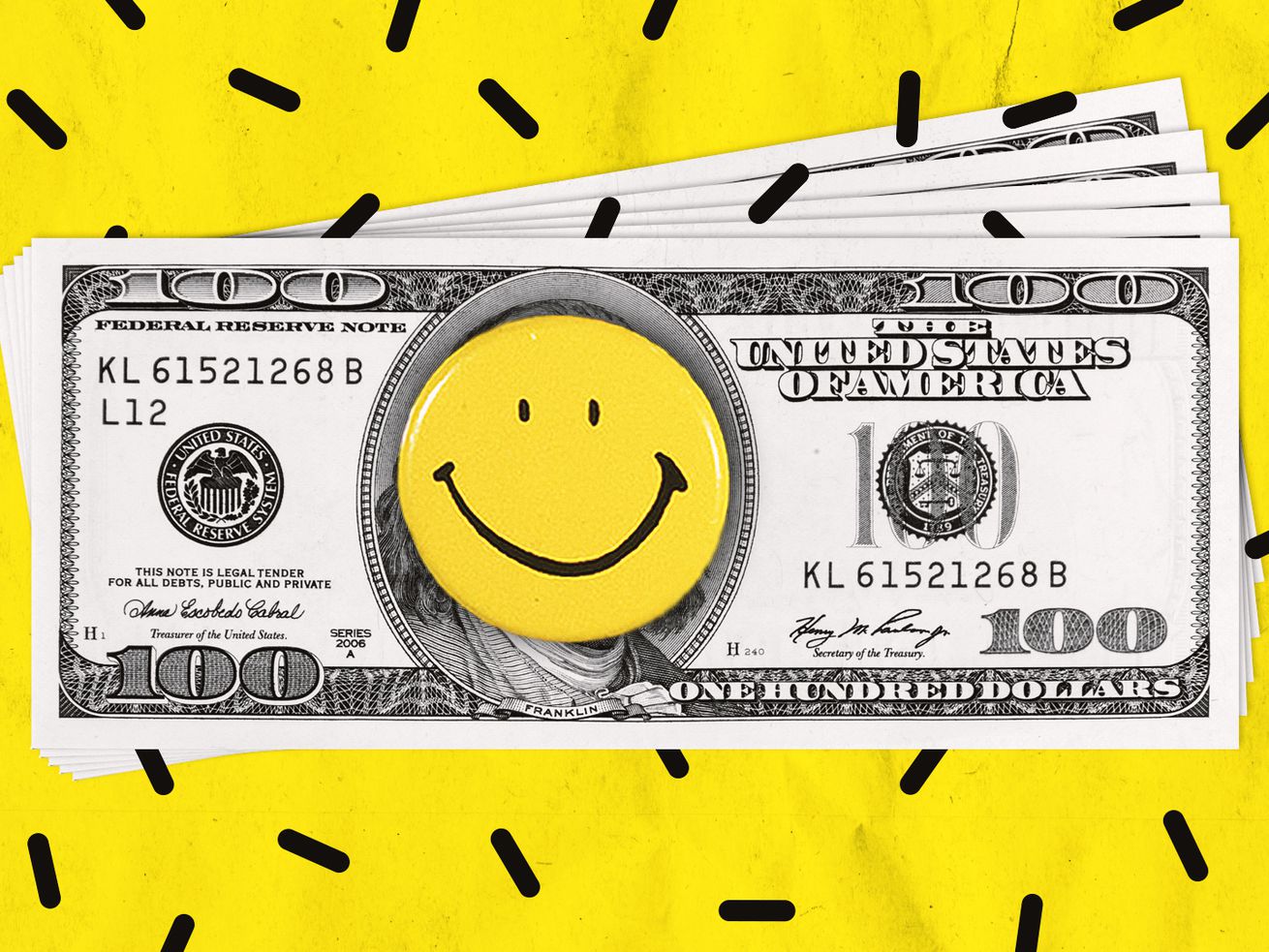
Illustration of a stack of one hundred dollar bills with a yellow smiley face pin over the portrait of Benjamin Franklin.

Zac Freeland/Vox

Simply having a lot of it won’t automatically increase your sense of well-being. “But using it well can,” says one expert.

The Highlight by Vox logo

It was early February in Los Angeles, and Andra Izgarian, 29, had reached a career high point: As the director of media operations at Condé Nast, she had scored an invitation to the 2019 Grammys.

In the company’s VIP box, executives in tuxedos and floor-length dresses sipped champagne from the open bar as artists including Lady Gaga and Alicia Keys performed. “It was a great chance for me to network,” Izgarian says. “These were some of the smartest people that I’d encountered at that point, really amazing people to look up to.” But as she surveyed the scene, all she could think was: “I can’t do this for the next 30, 40 years.”

Izgarian felt like a cog in a machine. Restless, she’d taken an interview with Outpost, a network of coliving and coworking locations in Southeast Asia, to run media relations for its new location in Bali. On Grammys night, she made up her mind: If Outpost offered her the job, she’d accept.

Less than two months later, she’d sold most of her stuff and moved to humid, chaotic, staggeringly beautiful Bali. The decision meant putting more than 8,000 miles between herself and her family, taking a pay cut, and focusing on her lifestyle rather than chasing traditional professional success.

Overall, she says, she’s happier: No longer weighed down with an hour-long commute and rigid routine, she has an easier time living in the day-to-day. “If I didn’t take a chance and leave corporate America to see what else was out there and really get out into the world …” she says, trailing off. “That’s what I would regret.”

Many of us can relate to Izgarian’s feelings of dissatisfaction and stagnation, the stubborn sense that the path in front of us is neither enjoyable nor leading to lasting well-being. (Having the luxury of worrying about this, of course, is a considerable privilege.)

Moving to Bali seems to have worked for Izgarian, but it isn’t the only antidote. A growing body of research shows we can reliably boost well-being by reframing the way we think about money and making financial decisions that lead to long-term gains in life satisfaction.

Researchers divide happiness into two general categories: the level of positive emotions, such as pride, joy, contentment, and curiosity, which we experience on a day-to-day basis, versus an overarching sense of contentment and fulfillment. “It’s being happy in your life versus being happy with your life,” says Sonja Lyubomirsky, a psychology professor at the University of California Riverside and the author of The How of Happiness: A Scientific Approach to Getting the Life You Want.

Both components are typically measured through self-reported questionnaires. Longer-term life-satisfaction “tends to be pretty sticky,” says Michael Norton, a professor of business administration at the Harvard Business School and the co-author of Happy Money: The Science of Happier Spending. Meaning: If you’re asked to rate your happiness on a 10-point scale, he says, “If you are a seven kind of person, you often stay around seven.” How happy you are on an immediate basis is far more variable, capable of fluctuating widely by the day or even hour.

Broadly speaking, there is a linear pattern between money and life satisfaction. “You think your life is better the more of it you have,” says Ashley Whillans, an assistant professor at Harvard Business School whose research focuses on trade-offs between time and money. Up until a point, that is, after which the correlation flattens and then decreases slightly, perhaps because previously unfathomable comparisons emerge when you’re keeping up with the one percent. (This threshold is squishy and dependent on a range of variables, such as the cost of living in your region, whether you live in a democratic society, and how rich your neighbors are.)

Money is a powerful predictor of well-being in large part because it protects against stressful, negative experiences, from the fundamental (financial insecurity, a lack of basic necessities, such as food and shelter) to the secondary (layovers, having to go grocery shopping in bad weather). When used strategically, it’s also good at fostering fulfilling experiences, relationships, and a sense of community — all reliable ways of boosting well-being.

With that in mind, here’s what experts have to say about the spending decisions that can increase happiness — along with those that can’t. While many of these strategies work for people across income levels, as you can imagine, the less money you have, the harder some of these tips are to adopt, or adopt regularly.

At the same time, “Just having money doesn’t necessarily translate into greater happiness,” Whillans says. “But using it well can.”

Buy time

Much of Whillans’s work has focused on the benefits of outsourcing unpleasant or disliked tasks on well-being. She’s co-authored a number of studies on the topic; in one of the most widely reported, participants who were asked to spend $40 on time-saving purchases were in a better mood and less stressed at the end of the day than when they were instructed to buy something material. In another, couples who reported making the same sorts of purchases together were happier in their relationships.

Outsourcing’s impact on happiness seems obvious. Who wouldn’t be happier if the unpleasant or tedious, time-sucking tasks in our lives (cleaning, laundry, public transportation) were taken care of for us, and we were magically gifted hours that could be diverted toward more meaningful and enjoyable activities, such as visiting friends or going to a movie?

Unfortunately, we’re not great at valuing time over money, Whillans says. There are powerful societal forces pushing us towards this mental trade-off, including the tendency to equate busyness with status, and the expectation that success requires managing every area of our lives without assistance. On a small scale, this can make taking a taxi to the airport or ordering takeout — services that save time — feel more extravagant than purchases that result in something tangible, like a new coat or couch. On a larger scale, it can lead to a series of escalating decisions that preserve our money at the expense of our time.

For women, these societal currents can be particularly strong. Whillans has spoken to professional women over the course of her research who still view outsourcing child care, laundry, or cooking as a personal failing. In addition to a demanding, full-time job, Lyubomirsky, 52, of the University of California Riverside, has four kids. When the youngest two were small, she hired a night nanny.

“It was so worth it,” she says, buying her time and, perhaps more important, sleep. Still, she had to justify the decision to herself in the way she rarely did for expensive material purchases. She also fielded questions from other people who, she sensed, were implicitly judging her for outsourcing any aspect of motherhood.

To change spending habits, it helps to think about — and value — time more like money, Whillans says. This can apply to small purchases, such as going out to eat rather than cooking in order to spend quality time with a partner. It can also impact significant decisions, such as seeking out a job for its flexibility rather than the salary and prestige, as Izgarian did, or a house for its proximity to work rather than the square footage.

Spend money on experiences

If you have the choice between going to dinner with a friend and buying a new TV, the latter might seem like a wiser investment. Unlike the impermanence of a meal, TVs stick around.

Physically, that is. Psychologically, the effect of buying stuff is less substantial, says Tom Gilovich, a psychology professor at Cornell University. Humans are tragically skilled at hedonic adaptation, the process by which we adjust to upgrades so thoroughly that they cease to exist in our consciousness, eliminating any lasting gains in happiness.

Experiences are often the better investment. “Even though, in a material sense, they come and go, they live on in the stories we tell, the relationships we cement, and ultimately in the sense of who we are,” Gilovich says. Experiences are also great at filling a primal need: meaningful relationships with other people. Even low-key activities have the potential to shape our sense of identity through new memories and connections. “In an important respect, we are the total sum of our experiences,” Gilovich says.

And unlike disappointing purchases, experiences can be recast as something we wouldn’t change. “It’s hard to romanticize a bad material thing,” Gilovich says. “It’s pretty easy to romanticize bad experiences.”

For Izgarian, moving across the globe confirmed her suspicion that she’d fallen into the privileged trap of owning too much. Before leaving LA, she donated or sold more than 90 percent of her possessions. Today, everything she owns fits in two suitcases. There are tradeoffs, of course: convenience, comfort, roots. And yet the ability to pack up and move at a moment’s notice is an “inexplicable feeling,” she says. “There is nothing weighing me down.”

A life decentered from stuff has realigned her days around experiences. Some of her favorite memories in Bali are simply getting from point A to point B. “You’re with your friends in a little scooter gang driving through all these lush green fields,” she says. “It’s just as fun as the destination itself.”

Give money away

An associate philosophy professor at the University of Oxford, William MacAskill helped found the effective altruism movement. The majority of his time and annual income (anything above $34,000) goes toward using his scarce resources to do the most good and getting other people to do the same.

MacAskill credits effective altruism with helping him emerge from a sustained bout of depression. He initially sought out treatment because his productivity had flat-lined, and he felt a moral responsibility to continue working toward a purpose larger than himself. “I don’t know if I would have had the same motivation otherwise,” he says.

The act of spending money on other people could be beneficial in itself. Harvard’s Norton contributed to a series of experiments that found people are happier after spending money on others versus on themselves. He’s also co-authored a survey that showed a correlation between life satisfaction and spending (as a percentage of annual income) on other people. The same effect does not exist when people spent more money on themselves.

This has yet to turn us into a nation of donors. In the US, people give, on average, between 2 percent and 5 percent of their income to charity each year, which remains fairly consistent across income levels, Norton says.

As anyone who has booked a vacation or experienced the heady dopamine rush of unboxing a new purchase can attest, “it’s not that spending money on yourself doesn’t feel good,” he says. “The issue is that it doesn’t seem to last for very long.”

Since discovering Norton’s research, Gilovich, the Cornell psychology professor, has made a deliberate effort to donate more to charity and be generous with people in his own life. Recently, he and his wife sent a food delivery to a friend going through a particularly hard time. Clicking the button to place the order gave Gilovich more pleasure than he’d ever experienced ordering food for himself, he says.

“It’s hard to find a more charming finding than that by giving away money, you not only make someone else happier, you make yourself happier.”


Laura Entis is a writer and editor focusing on health, business, and science. Her work has appeared in Fortune, Fast Company, Time Health, GQ, Consumer Reports, and Outside Magazine. She previously covered the monetization of human connection for Vox’s The Highlight.

from Vox – All https://ift.tt/2qv1cTo

Tom Steyer’s impeachment group is missing its big moment because he’s running for president

Democratic presidential candidate philanthropist Tom Steyer at the Liberty and Justice Celebration in Des Moines, Iowa, on November 1, 2019. | Scott Olson/Getty Images

Former employees of Tom Steyer’s impeachment group say they were strong-armed into joining his campaign when it looked like impeachment was dead over the summer.

Billionaire Tom Steyer put nearly two years and millions of dollars into gathering support for President Donald Trump’s impeachment. And now that impeachment is here, he’s running for president — and the group he founded to spearhead the movement is a skeleton of what it once was.

In October 2017, Snyder launched Need to Impeach, a political group dedicated to pushing for Trump’s removal from office. Through online, television, and on-the-ground campaigns, Need to Impeach gathered a list of more than 8 million supporters, an enviable number for any political cause. The California billionaire positioned himself as the face of the organization, appearing in ads and talking to the press about its mission. And then, in July 2019, Steyer decided to run for president.

Need to Impeach is still around but has scaled back significantly; it currently has just a handful of full-time staffers and otherwise leans on consultants. Former employees say that when Steyer made the decision to run, they were given two options: take a less-than-ideal severance and scramble to find another job, or work for his presidential campaign, where they would be well-rewarded, even though it wasn’t what they originally signed up for.

With an impeachment inquiry is underway in the House, the organization that was once a leading voice on the matter has taken a backseat. Steyer is still donating resources to the group, but he is obviously directing much more of his time, energy, and money to his presidential campaign.

The cynical read would be that Steyer, whose campaign rented and then bought Need to Impeach’s email list, used the group to build a voter file and publicize his name in advance of a presidential bid, and that employees who worked on the impeachment cause were given little choice but to join his campaign.

The more generous read is that the initiative was an honest effort at a cause Steyer believed in, and that in July 2019, the prospect of impeachment seemed pretty dead in the water, so it made sense for him to move on. Need to Impeach remains active — it’s still spending money on digital ads, and it’s starting to run television ads targeting Republican senators, too. As the group says, it’s laid the groundwork, and now other organizations and House Democrats can take the lead.

Still, it’s hard not to note the oddity of the situation: At the very moment Democrats need mass mobilization around impeachment, the guy who sank tons of time, energy, and money into the effort has instead embarked on what will likely be an ill-fated White House run. Though he’s polling well enough in some early states to make the debate stage, he’s averaging 1 percent support nationally in the polls.

“I think that there was a real space for Need to Impeach when it was first made, and I think it was important to have a voice out there talking about these issues. Even though, obviously looking back on this stuff, it just seems like it was a cynical play on his part to build a platform for himself, it wasn’t that from the start,” one former Need to Impeach employee told me. “There’s no denying it had an added benefit for him.”

As public impeachment hearings have kicked off, Need to Impeach merits a victory lap — something it once thought was dead in the water is actually happening.

But now, when the group could play a big role in the next phase of the fight, it’s been hollowed out. I spoke with Need to Impeach, Steyer’s campaign, and six former employees and aides (all of whom agreed to speak on the condition of anonymity) about what happened.

Steyer’s impeachment employees and email list went to his presidential campaign

A couple of weeks before Steyer announced his presidential campaign on July 9, Need to Impeach employees were called into a meeting where they were informed of the decision: Despite his January announcement that he wouldn’t make a White House run, he had changed his mind and decided to go for it after all. Need to Impeach workers weren’t out of a job, but the offer extended to most of them was that if they wanted to stay employed, they’d need to join his 2020 campaign staff instead. Many of them were stunned.

“When he decided to run for president, he didn’t really give much of an option to keep working on impeachment,” one former employee told me. “If you left, the [severance] offer wasn’t great, but they dangled more money at you to stay.”

One employee who agreed to transition to the Steyer campaign said he “started looking for jobs immediately.”

Steyer, who is worth an estimated $1.6 billion, pledged to spend at least $100 million on his presidential campaign. He also said he wouldn’t abandon his outside groups, including Need to Impeach and NextGen America, a nonprofit he formed in 2013 to mobilize young voters, and pledged to spend $50 million on them. Despite that promise, two former Need to Impeach employees described the organization s “gutted.”

“Need to Impeach staffers were strong-armed into going on to the camp campaign and given very few options to do other things,” said one person who was employed at Need to Impeach at the time.

Two of the people I spoke with placed some of the blame for Need to Impeach’s demise and Steyer’s presidential bid on his campaign manager, Heather Hargreaves, who previously served as the executive director of NextGen America. Of course, it is Steyer who ultimately calls the shots, and it became clear in reporting for this story that there was a lot of competition among Steyer’s groups and campaign around who has the candidate’s ear.

In a statement to Vox, Hargreaves said that when Steyer decided to run for office, “severance was provided for any employees that decided not to join the campaign or stay with either entity.”

Both Need to Impeach and Steyer’s campaign declined to comment on the details of the severance packages that were offered.

The campaign confirmed that prior to Steyer’s official announcement, Need to Impeach staff members were informed of the decision and invited to join the campaign, and that 73 of the campaign’s current 300 employees previously worked at Need to Impeach or NextGen. The campaign declined to comment on the breakdown between the two, though the people I spoke with said Need to Impeach was more impacted than NextGen.

Hargreaves said that Steyer’s support for Need to Impeach and NextGen “has not changed since he announced his campaign,” though he has resigned his positions at both groups and no longer oversees their strategies. “Now, thanks to Tom’s faith in the American people, the job to impeach the president is in the hands of Congress,” she added.

Steyer’s campaign also pointed out that the candidate donated $2.7 million to Need to Impeach in October. In the first six months of the year, he put a total of $10.4 million into the organization, according to Federal Election Commission filings. But by comparison, he poured $47.5 million into his presidential campaign during the third quarter of this year. And as for that enviable email list of more than 8 million supporters who signed on to support impeaching Trump? Need to Impeach initially told me they had rented the list to Steyer’s campaign. Steyer’s campaign told me that they had rented the list and then bought it. When I followed up with Need to Impeach, they deferred to the campaign. Steyer’s campaign says they use the Need to Impeach list to get backers to opt into Steyer’s campaign list.

“In retrospect, what we were doing was list-building for his presidential run, because we were focused on list-building far longer than made sense,” one former employee told me.

The employee told me there was optimism within the campaign that people on the Need to Impeach list would convert to the campaign list more easily — and when that wasn’t the case, campaign staff realized they would need to hit it more. “We had just spent a year building a list of people who wanted Trump out of office. What a great email list to have if you can pivot that to a presidential candidate,” the employee said.

But just because 8 million people signed up to impeach Trump doesn’t mean they were interested in Steyer’s presidential bid.

“If he’d stayed focused on leading his impeachment effort, Tom Steyer would be getting credit now as a bold visionary. Instead, people are laughing at the most expensive, worst-run presidential campaign in the current field. The people who talked him into this disaster should be fired,” said a former Steyer aide.

Need to Impeach says it’s focusing on Senate Republicans

Need to Impeach might still be active, but it’s no longer firing on all cylinders.

It claims to have the largest list of supporters in American politics and insists that now that an impeachment inquiry is happening in the House, it has focused its attention on pressuring Senate Republicans, who will ultimately decide whether to convict Trump and remove him from office. In October, it launched a $3.1 million TV ad campaign targeting vulnerable Republican senators in Arizona, Iowa, Maine, and Colorado. (It has since launched a second round of ads there as well.) It’s also sending a mobile billboard around Washington, DC, and plans to take out ads targeting Senate Majority Leader Mitch McConnell in Kentucky.

“If conviction is possible, believe me, we’re planning on going all in,” Nathaly Arriola, Need to Impeach’s executive director, said.

But as long as Steyer is running for president, “all in” on impeachment isn’t what it once was. NextGen America recently told HuffPost it is prepared to spend $45 million to increase voter turnout in 2020.

According to data from political communications agency Bully Pulpit Interactive, Need to Impeach’s spend on Facebook and Google ads peaked in March, the same month that House Speaker Nancy Pelosi (D-CA) came out against impeachment, despite pressure from many Democrats. March is also the month in which special counsel Robert Mueller submitted his report to Attorney General Bill Barr, though the redacted version wouldn’t be made public until April.

The group’s ad spending has slowed ever since, while Steyer’s has skyrocketed. In total, Need to Impeach has spent $4 million on Facebook and Google ads since the beginning of the year, while Steyer’s campaign has spent $11.5 million on Facebook and Google ads since the launch of his campaign in July. Many of Steyer’s digital-ad dollars are still going toward impeachment, but not most. Moreover, when people click the ads, they’re directed to his campaign website, not information about the broader movement for impeachment.

!function(){“use strict”;window.addEventListener(“message”,function(a){if(void 0!==a.data[“datawrapper-height”])for(var e in a.data[“datawrapper-height”]){var t=document.getElementById(“datawrapper-chart-“+e)||document.querySelector(“iframe[src*='”+e+”‘]”);t&&(t.style.height=a.data[“datawrapper-height”][e]+”px”)}});window.addEventListener(‘DOMContentLoaded’,function(){var i=document.createElement(“iframe”);var e=document.getElementById(“datawrapper-Lz5w1”);var t=e.dataset.iframeTitle||’Interactive graphic’;i.setAttribute(“src”,e.dataset.iframe);i.setAttribute(“title”,t);i.setAttribute(“frameborder”,”0″);i.setAttribute(“scrolling”,”no”);i.setAttribute(“aria-label”,e.dataset.iframeFallbackAlt||t);i.setAttribute(“title”,t);i.setAttribute(“height”,”400″);i.setAttribute(“id”,”datawrapper-chart-Lz5w1″);i.style.minWidth=”100%”;i.style.border=”none”;e.appendChild(i)})}()

“We made a decision with less resources to stop acquiring new names,” said Need to Impeach lead strategist Kevin Mack, essentially making the case that the group already has what it needs to model out the rest of the voter base. But, of course, they can no longer walk down the hall to Steyer’s office to ask him to cut a quick check for a new initiative. “Obviously, while Tom was actively involved in the campaign, he was going to spend more money than while he’s running for president,” Mack said.

In a separate statement to Vox, Mack said Steyer “should get enormous credit for fighting this fight” on impeachment and that he continues to fund the organization.

Steyer spent millions getting himself on the debate stage and is now sitting out on a lot of impeachment

It’s a moment when Democrats need all hands on deck for impeachment, and Steyer, one of the Democratic Party’s biggest donors and a longtime champion of impeachment, isn’t there.

Alberto Lammers, a spokesman for Steyer’s campaign, told me that although impeachment is not part of Steyer’s presidential platform, “he hasn’t abandoned the movement,” pointing to Steyer’s donation from October. “He’s going to do what it takes to make sure that Need to Impeach has the funds that they need,” he said.

Need to Impeach says it feels like it’s laid a lot of the groundwork for other groups — and, of course, Democrats in Congress — to take the lead. Arriola told me that when she first started talking to lawmakers in the group’s early days, nobody wanted to “say the i-word.” That has changed.

To be sure, it was impossible for Steyer or anyone to have foreseen in July 2019, when the Mueller report had come out and impeachment still wasn’t moving in Congress, that we were just a couple of months away from a whistleblower report on Trump’s call with the Ukrainian president that would change sentiment on impeachment entirely. And given the anti-billionaire sentiment pulsing through the Democratic Party right now, Steyer being too out front on impeachment might not help.

But he could play a role in the background, or could have redirected the group’s purpose over the summer — Need to Impeach briefly did an identity shift and became Need to Vote ahead of the 2018 midterms. According to the Center for Responsive Politics, Steyer put nearly $74 million toward the midterms, behind only Republican mega-donor Sheldon Adelson and former New York City Mayor Michael Bloomberg. Now, he’s reportedly offering Iowa politicians campaign contributions in exchange for their endorsements instead of focusing on the cause he purported to be all-in on for two years.

The former Need to Impeach employees I spoke with said they didn’t doubt Steyer’s belief that Trump should be impeached, but they say the timing of everything is, at the very least, unfortunate, and that Steyer’s resources would be better directed elsewhere.

“As billionaires go, I think he’s a good one,” one former employee said. “But what are we actually fighting against if we’re trying to get another person whose only experience is being rich elected as president?”

from Vox – All https://ift.tt/3334avu

How the Real Housewives built cable TV’s biggest fandom

The Real Housewives of Beverly Hills at BravoCon. | Charles Sykes/Bravo/NBCU/Getty Images

The Bravo network’s interconnected universe of beautiful rich people has won over millions of fans. Now they have their own convention.

Six former Real Housewives are sitting onstage in a packed ballroom in Manhattan when an audience member, during a question and answer portion, politely asks if Caroline Manzo would be willing to throw a slice of ham at him. Like, at his face. Caroline, the redheaded ex-matriarch of the Real Housewives of New Jersey with infinite quotable insults (“you hang out with trash, you start to smell like garbage”) and possible mafia ties, of course, says yes. So the guy gets on stage, ham in hand, and Caroline flogs him with lunch meat.

The request is a reference to a scene from season two, way back in 2010, when Manzo’s three adult children are making sandwiches and suddenly start throwing ham at each other. It’s also indicative of a certain kind of rhetoric common in online fandoms, wherein the fan expresses their adoration by asking the celebrity to run them over or fling them from a building. That to be in the presence of the object of their admiration is worth being humiliated, or murdered.

We are at the first-ever BravoCon, a three-day event where 10,000 people have paid between $125 for a one-day general admission pass and $1,500 for a three-day super VIP package to get close to to their favorite stars. Attendees, most of them women in their 20s, 30s, and 40s, look not unlike “Bravolebrities” themselves: They have perfect TV blowouts and wear leopard print and are drinking wine before noon; in an alternate timeline they could have been the ones onstage throwing ham at people. They are here alongside the stars of reality shows like Southern Charm, Million Dollar Listing, Below Deck, and the network’s crown jewel, the Real Housewives franchise, for panel discussions and photo ops devoted to the celebration of what can only be described as the Bravo Extended Universe.

That universe, which began in 2006 with the Real Housewives of Orange County, is wide-reaching, ever-growing, and comfortingly cohesive — at BravoCon, executive producer Andy Cohen announced the addition of the Real Housewives of Salt Lake City, where fans will watch the same slice of wealthy socialites they’ve come to expect — except this time, with Mormons. Spinoffs are frequent: The biggest stars sometimes get miniseries in the lead-up to a big life event, like a wedding; one former Atlanta housewife has carried her own show since 2012; and one of the network’s most successful shows, Vanderpump Rules, began as a spinoff of the Real Housewives of Beverly Hills. Every weeknight, stars from the Bravo universe congregate on Cohen’s talk show, Watch What Happens Live, to gossip and share news from their corners of the galaxy.


Charles Sykes/Bravo/NBCU Photo Bank via Getty Images
Kim Zolciak-Biermann performs at the BravoCon taping of Watch What Happens Live.

Over the past decade and change, this web of television shows has amassed a cultish, millions-strong following of superfans who pour over the details of reality stars’ lives and now, have traveled to New York City to pose for pictures with them. Though I am here as a journalist, I also count myself among them: people who have spent countless hours watching the network’s shows, following Bravo gossip Instagram accounts, listening to more than one Bravo podcast, and breathlessly discussing news in Housewives Facebook groups and Slack rooms. That BravoCon — an intricately orchestrated production that involved three locations, a pop-up museum, a 2,000-audience-member episode of Watch What Happens Live, and the handling of dozens of professionally high-maintenance celebrities — can even exist and succeed is a testament to fans’ unwavering loyalty to watching other people’s lives.

“Housewives fans are like sports fans,” remarked Kyle Richards, a Beverly Hills housewife, during the WWHL taping. That’s not actually true, though — they’re way more into it.

How Bravo built an empire out of a single reality show

Bravo used to be fancy. At its founding in 1980, there were no commercials, and programming included classic films, ballets, and operas. Then in 2002, NBC bought Bravo and shortly thereafter pivoted to the then-buzzy genre of reality television, beginning with Queer Eye for the Straight Guy and eventually Project Runway, Top Chef, and the Real Housewives of Orange County.

The latter was meant to act more like an anthropological nature documentary than the wine-slinging, wig-pulling reputation it earned in later years. Riding off the success of ABC’s Desperate Housewives and Fox’s The O.C., the show fixated on five women living in a gated community in Coto de Caza, and only occasionally showed them interacting with each other, much less actually fighting.


NBCUniversal via Getty Images
The original cast of the Real Housewives of Orange County, which first aired in March 2006.

“I thought I was just helping out a friend,” says Jeana Keough, one of the original cast members when I meet her in the BravoCon press room. “[Executive producer] Scott Dunlap was my neighbor, and for years he’d say, ‘I want to do a Curb Your Enthusiasm show about your family.’”

She gives partial credit to the 2007 Writers’ Guild of America strike for the early success of the show — it was one of the few that didn’t have much use for writers, after all. But it’s what Bravo ended up doing with that success — replicating the formula seamlessly into nine more cities and endless spinoffs — that created a single, shiny universe where all the Bravo stars seemed to reside, launching businesses and shilling products so that even viewers could buy their way into it.

BravoCon attendees I spoke to recalled getting hooked on a single show — The Real Housewives of Beverly Hills or Million Dollar Listing, before eventually watching enough Bravo shows that they’re now fully invested in whether one employee of an ex-Housewife Photoshopped text messages to claim that she slept with a different former employee. Bravo has become a cultural behemoth, one that has been discussed and debated for more than 10 years — whether it is good or bad, real or fake, trash TV or high camp.

Yes, the stereotype of the Real Housewives being about a bunch of wealthy middle-aged women screaming at each other has some basis in truth. While the early episodes of Orange County were relatively light on interpersonal drama, by the time New York and Atlanta debuted in 2008, the Housewives formula had been tweaked to ensure rivalries would ensue. There have been physical fights. At times the women say unfathomably cruel things to each other. There have also been extraordinarily dark moments — women relapsing on their sobriety, women being domestically abused, women finding out while on camera that their mother has died; women dealing with addiction and infidelity and divorce and depression.


NBCU Photo Bank/NBCUniversal via
The Real Housewives of Atlanta season 8 reunion.

These issues are also what give the Real Housewives themselves a degree of relatability despite their fabulous wealth. “Relatable” was a refrain I heard multiple times at BravoCon from both fans and stars, as reasons for the show’s massive success, which I found somewhat paradoxical. For as foreign as starting a cancer charity after you’ve been accused of helping someone fake cancer or spending $60,000 on a 4-year-old’s birthday party is to most people, everyone can understand the experience of feeling excluded or bullied. Drama ranges from serious marital issues and impending financial doom to pure petty gossip; on any episode of a Bravo show there’s something for everyone to theoretically “relate” to, even if the trappings of the stars’ lives include indoor pools and living room-sized closets. However dark a show gets, there’s at least usually a nice kitchen to look at.

“Relatability” gets more complicated, however, when considering the Housewives franchise’s track record with race. Shows have historically been divided, with Atlanta and Potomac primarily centered on black women and the others largely white; a few months ago, the announcement that Beverly Hills will soon feature its first black cast member was major news. Though Bravo shows include a breadth of racial and sexual diversity, Housewives has always been mostly segregated. Who gets to relate to which Housewife, then, becomes more complicated.

Even so, Housewives fans themselves are diverse — the tenor of the conversation these days celebrates how so many of its fans are feminists, women, gay men, and queer people who digest the shows with both earnestness and irony, and who understand that the Real Housewives is best viewed as fun escapism rather than something prescriptive or aspirational.

Why we keep watching Bravo — and why Bravolebrities keep opting in

We’re in line to take photos with a handful of men from the Bravo universe — Craig of Southern Charm, a show about old-money millennials in Charleston; and the Toms (Sandoval and Schwartz) of Vanderpump Rules — when I meet three women who’ve traveled to BravoCon from Washington, DC, and Seattle. They have “kind of important jobs,” they laugh; one is a lawyer, another works in climate communications, and the third is a planned gift fundraiser. “It’s really nice to come home and unwind and enjoy the irreverence and silliness and drama,” says one of them, Amy.

Mary, the lawyer, says, “I also, well, I always just want to yell at people all day at work and I can’t. So it’s nice to see these people just openly yelling at each other, which I know isn’t a great reason, but I also really dig it. Even in their theoretical worst moments, they are freaking hilarious.”


NBCU Photo Bank via Getty Images
Tom Sandoval of Vanderpump Rules pours cocktails at BravoCon.

NBCU Photo Bank via Getty Images
Tom Schwartz of Vanderpump Rules takes fan selfies at BravoCon.

It’s true. The Real Housewives, Vanderpump Rules, Southern Charm, and all the other Bravo shows are truly funny, which is in part thanks to clever editing but mostly due to smart casting; as former New York Housewife Heather Thomson once told the New York Post, “They don’t care if [a potential Housewife] is skinny, fat, young or old — she just has to be funny. [Producers] need someone who is quick-witted and the queen of the one-liner.” (Though the claim that producers don’t care if a Housewife is fat is most certainly a lie.)

It also explains the myriad meme T-shirts I saw at BravoCon: Bethenny Frankel’s #thisisacrisis T-shirt, one that just said “Jovani!”, “June, June, Hannah” for Below Deck, and “Yeah, I’m drinking Luann!”

At the merch station, there are T-shirts that say “I need my own Bravo show.” That’s part of the fun of Bravo, too: imagining what you’d be like as a waiter at SUR on Vanderpump Rules (they’re called SURvers) or whether you would have sided with NeNe or Cynthia in season six and seven of Atlanta (obviously Cynthia!).

BravoCon knows this — there are special “experiences” where you can film your own Housewives intro while a producer eggs you on in front of a wind machine. There’s a Housewife Hall where you can pose next to neon signs blaring the franchise’s most iconic quotes and oil paintings of dramatic reunion moments, and an entire museum with important memorabilia, including but not limited to: Lisa Rinna’s sandwich bag of pills, an installation of Dorinda Medley’s infamous fish-themed guest room in her Berkshires mansion, a replica of Dorit Kemsley’s blonde wig and dozens of gaudy bejeweled hair clips, and Tamra Judge’s old breast implants.

Everywhere at BravoCon there are goofy mementos of Bravo wit: Bathrooms are plastered in phrases like “Pat the puss” and “Close your legs to married men;” a sign reading “It’s all happening” welcomes visitors to the main ballroom, a reference to Vanderpump Rules cast member Scheana Shay’s enormous forearm tattoo.


NBCU Photo Bank/NBCUniversal via
Dorinda Medley of the Real Housewives of New York, during a scene in which she says the now-iconic line, “I’ll tell ya how I’m doing: not well, bitch.”

It is playful, and it is not always clear whether the Bravolebrities are the butt of the joke. Being on a television show that demands constant access to every wrinkle in your personal life is not always a pleasant experience, even when you’re technically getting paid. Andy Cohen, for his part, doesn’t entertain the idea that the show harms its stars. When Taffy Brodesser-Akner profiled him in 2017 and asked whether he felt bad for the Housewives, he shook his head. “I’m in a business relationship with these women,” he said. “They know what they’re doing.”

As much as it is known for riveting personal drama, the Bravo universe is now known as an incubator for celebrity side hustles. The most successful example is Bethenny Frankel’s diet margarita concept Skinnygirl. But now, nearly everyone who appears on a Bravo show is there to promote something else — a fragrance, a budding pop music career, pink dog food, or if all else fails, an Instagram account. These products — from Vicki Gunvalson’s vodka, Vicki’s Vodka, to Shereé Whitfield’s She By Shereé jogger line — extend the Bravo universe to your living room, and the many food and beverage products are often meant to be enjoyed while watching the show. If buying one of them means purchasing your way into Bravodom, then a ticket to BravoCon is the ultimate get.

Still, there are some Housewives for whom any business deal, no matter how lucrative, would seem insufficient to negate the effects of appearing on the franchise. I am interviewing Kim Richards at BravoCon after the panel for Housewives “OGs” when I ask why she kept coming back to the show even after her first few seasons proved so tumultuous. Richards had one of the darkest arcs in Housewives history: The former child star struggled with alcoholism and relapses in sobriety, ultimately culminating in an arrest for public intoxication, and drunken screaming matches with her sister, fellow Beverly Hills cast member Kyle Richards.


NBCU Photo Bank/NBCUniversal via
Kyle (left) and Kim Richards of the Real Housewives of Beverly Hills.

“What brought me back was I really wanted the audience to see it,” she says, referring to her health struggles. It is at this point that she begins to cry. “The fans may come back because they end up getting attached to us. A lot of people identified with [me] because they were there. And then they saw me get better. They might have family members, they might have a mother, a sister [dealing with similar issues].”

Tom Sandoval of Vanderpump Rules told me, while in full drag, that there are three reasons he keeps coming back to the show. “First of all, it’s therapeutic. Second, it pays the bills. Third, it’s a blast and it’s like, a reciprocal relationship to some extent. Like when I meet fans of the show, it’s very cathartic. We talk about similar instances they’ve been through in life, then we have a heart-to-hearts. It’s like an instantaneous bond.”

To be perfectly honest, I felt like Tom and I were already friends by the time we’d met, and I remembered that at a panel earlier that morning, Andy Cohen had surveyed the ballroom and told the audience, “These are your new best friends,” referring to the people sitting next to us. The people on stage were already our best friends, though — women we’ve watched for more than a decade. We knew exactly what kinds of fights they’d get in with their husbands, we’d seen their children grow up, we saw them get drunk on vacation and say things like “I’m sorry you feel that way.” Because I was there without my friends and family, with whom I talk obsessively about the Bravo universe, I felt a dull sense of loneliness, reminding me of how much more fun it would have been had I come with someone else.

It was pure coincidence that the second BravoCon attendee I spoke to also happened to run a Bravo Instagram account that I and 45,000 other people follow. Katie and Betsy, the proprietors of @twobravosisters, never had much in common growing up until they both communicated their shared love of Bravo. “We weren’t very close, so we were like, ‘Let’s do this to try to contact each other and talk more and bring us together,’” says Betsy.

“We went from talking twice a year to twice a day,” Katie adds. “We’ve just been crazy about Bravo and closer as sisters.”


NBCU Photo Bank via Getty Images
Countess Luann of the Real Housewives of New York performs in her cabaret show at BravoCon.

My sister and I, too, bond over Bravo, much to the annoyance of our parents who have zero clue who Austen or Ashley or Gina or Dorinda are and why we know so much about their lives. Bravo, like any fandom, is social, and BravoCon is the homecoming dance, where everyone dresses up to gossip about the kings and queens.

It’s just before the big Watch What Happens Live taping, and we’re waiting outside in the dark as the Bravolebrities begin to exit their shiny black vans and into the backstage area. Brittany and Katie from Vanderpump Rules pass through to dozens of screaming fans, followed by Stassi, Lala, and Lala’s enigmatic fiancé Randall. The “tres amigas” of the OC Housewives — Shannon, Tamra, and Vicki — roll through next, Shannon hand-in-hand with her very new boyfriend, the first man she’s dated publicly since her ex-husband David revealed that he’d had a long-term affair a few seasons ago. In the aftermath, her erratic mental health, financial struggles, and weight gain became a central storyline on the show, but today she’s beaming, mouthing “oh my god” at the number of people waiting to catch a glimpse of her.

As I head to the ballroom for the show, I overhear a fan say, “There’s like, every celebrity you can think of here!”

Sign up for The Goods’ newsletter. Twice a week, we’ll send you the best Goods stories exploring what we buy, why we buy it, and why it matters.

from Vox – All https://ift.tt/2O4pVqz

November 2019 Democratic debate

MSNBC And The Washington Post Prepare To Host The 5th Democratic Presidential Primary Debate In Atlanta

Photo by Joe Raedle/Getty Images

Everything you need to know about the fifth Democratic debate, taking place in Atlanta.

Ten candidates will take the stage on the evening of Wednesday, November 20th for the November Democratic debate, the fifth debate so far in the 2020 Democratic primary race. The debate will take place in Atlanta, Georgia at Tyler Perry Studios, hosted by MSNBC and the Washington Post. It will stream live on MSNBC.com and WashingtonPost.com.

The 10 candidates that made the cut are: former Vice President Joe Biden, Massachusetts Sen. Elizabeth Warren, Vermont Sen. Bernie Sanders, California Sen. Kamala Harris, New Jersey Sen. Cory Booker, South Bend, Indiana, Mayor Pete Buttigieg, Entrepreneur Andrew Yang, Billionaire and climate advocate Tom Steyer, Minnesota Sen. Amy Klobuchar, and Hawaii Rep. Tulsi Gabbard.

To qualify for this debate, candidates had to reach a higher threshold than past debates when it came to polling and fundraising. In addition to securing at least 165,000 individual donors, they were required to reach 3 percent in four DNC approved surveys, or 5 percent in two DNC approved polls from the four earliest primary and caucus states.

The debate will also feature an all-female lineup of moderators, including MSNBC anchors Rachel Maddow and Andrea Mitchell, NBC News White House correspondent Kristen Welker, and Washington Post White House reporter Ashley Parker.

Follow this storystream for all of Vox’s coverage of the debate, including the lineup, how to watch, analysis, breaking news updates, and more.

from Vox – All https://ift.tt/33ZOESt

“Knowledge workers” could be the most impacted by future automation

A staff member eats lunch in front of SoftBank Group Corporation’s Pepper humanoid robots during the World Robot Challenge in Tokyo, Japan, on October 17, 2018. | Tomohiro Ohsumi/Getty Images

A new study of artificial intelligence suggests better-paid, better-educated workers might be more impacted by automation than previously thought. 

The robot revolution has long been thought of as apocalyptic for blue-collar workers whose tasks are manual and repetitive. A widely cited 2017 McKinsey study said 50 percent of work activities were already automatable using current technology and those activities were most prevalent in manufacturing. New data suggests white-collar workers — even those whose work presumes more analytic thinking, higher paychecks, and relative job security — may not be safe from the relentless drumbeat of automation.

That’s because artificial intelligence — powerful computer tech like machine learning that can make human-like decisions and use real-time data to learn and improve — has white-collar work in its sights, according to a new study by Stanford University economist Michael Webb and published by Brookings Institution. The scope of jobs potentially impacted by AI reaches far beyond white-collar jobs like telemarketing, a field that has already been decimated by bots, into jobs previously thought to be squarely in the province of humans: knowledge workers like chemical engineers, physicists, and market-research analysts.

The new research looks at the overlap between the subject-noun pairs in AI patents and job descriptions to see which jobs are most likely to be affected by AI technology. So for example, job descriptions for market-research analyst — a relatively common position with a high rate of AI exposure — share numerous terms in common with existing patents, which similarly seek to “analyze data,” “track marketing,” and “identify markets.”

!function(){“use strict”;window.addEventListener(“message”,function(a){if(void 0!==a.data[“datawrapper-height”])for(var e in a.data[“datawrapper-height”]){var t=document.getElementById(“datawrapper-chart-“+e)||document.querySelector(“iframe[src*='”+e+”‘]”);t&&(t.style.height=a.data[“datawrapper-height”][e]+”px”)}});window.addEventListener(‘DOMContentLoaded’,function(){var i=document.createElement(“iframe”);var e=document.getElementById(“datawrapper-CXQOO”);var t=e.dataset.iframeTitle||’Interactive graphic’;i.setAttribute(“src”,e.dataset.iframe);i.setAttribute(“title”,t);i.setAttribute(“frameborder”,”0″);i.setAttribute(“scrolling”,”no”);i.setAttribute(“aria-label”,e.dataset.iframeFallbackAlt||t);i.setAttribute(“title”,t);i.setAttribute(“height”,”400″);i.setAttribute(“id”,”datawrapper-chart-CXQOO”);i.style.minWidth=”100%”;i.style.border=”none”;e.appendChild(i)})}()

It’s more forward-looking than other studies in that it analyzes patents for technology that might not yet be fully developed or deployed.

Typically, estimates of automation effects on the workforce, which vary widely depending on the study, have focused on what jobs could be automated using existing technologies. The findings have generally been most damning for lower-wage, lower-education workers, where robotics and software have often eliminated part or all of certain jobs.

The specter of increased automation has raised concerns about how large swaths of Americans will be able to support themselves when their jobs become mechanized and whether the loss of low-income jobs will increase wealth inequality. This new patent research suggests automation’s impact could be much broader and affect high-paying white-collar jobs as well.


Lionel Derimais/Corbis via Getty Images
Staffers from different startups work on their computers at the coworking space Collective Temperance Hospital in London, England, on June 9, 2016.

A caveat: Some AI patents might never be used, and they might not be used for their initial intentions. Also, one’s actual job is not wholly defined by the text of the original job description. But this study does provide a framework with which to view general exposure to automation.

As Adam Ozimek, chief economist at freelancing platform Upwork, put it, “Just because someone patented a device, for example, that used artificial intelligence to do market research does not mean that AI will in fact be successful at this for practical business use.”

The Stanford study also doesn’t say whether these workers will actually lose their jobs, only that their work could be impacted. So it’s perfectly possible these technologies will be used to augment jobs rather than supplant them.

This is not the first time white-collar jobs have been in jeopardy from technology. Many white-collar jobs that were supposed to be sent overseas — actuaries, technical writers, and customer service reps — didn’t see the cuts that were predicted more than a decade ago.

And for what it’s worth, market-research analysts seem to think many elements of their jobs can’t be done by using artificial intelligence.

“It can tell us what’s going on, but it can’t tell us why it’s happening,” Gina Woodall, president of marketing research firm Rockbridge Associates, told Recode. “It’s getting better and better at telling us what consumers are doing, but it won’t be able to tell us what’s driving them.”

What market research analysts say

Nearly 700,000 people in the US work as market-research analysts, people who study market conditions to sell products or services, and their job growth outlook for the next decade is much higher than average, according to the Bureau of Labor Statistics. It’s a job that, as its title implies, brings analytic thinking to bear on disparate data and thus is usually safe from talk of automation.

But according to Webb’s research, market-research analysts are much more likely than average to have overlap with AI patents.

Market-research analysts have already begun to contend with AI in their jobs, but so far it’s been used to assist their work or free them to do other tasks.


Per-Anders Pettersson/Getty Images
Techies work at the Woodstock Exchange in Cape Town, South Africa on November 22, 2016.

“We’ve deliberately moved up-market, doing less cookie-cutter simple research because there are a lot of automation and tools that can do that easily,” Woodall, who has been working in market research for 20 years, said. “Where I see our place in the world is focusing on more complex business problems using higher-level analytics.”

Steve King, partner at the small business consulting firm Emergent Research, put it this way: “Our value-add is not data collection or even the first layer of analysis (we mostly outsource these steps). Our value-add is being trusted advisers and an outside source of business insights.”

George Augustaitis, director of industry analytics at CarGurus, previously worked at a company that worked directly with an AI tool called Lucy, which would be able to answer analyst questions based on the data they uploaded to it.

“My team embraced it because we all had the idea that it would be less of the grunt work for us building the charts,” Augustaitis told Recode. “We would spend more time analyzing the data, connecting the dots, being in meetings presenting to clients.”

Webb’s data shows that not every aspect of market research analysts’ jobs fall under AI patents. Those aspects include conducting research on consumer opinions, collaborating with other professionals, and attending staff conferences to brief management on their findings.

Augustaitis said he thinks someday AI could be a “great junior analyst” but thinks such tools would fail when situations were abnormal, like the 2008 recession.

“I don’t know how they would perform when something happens that no one is expecting,” he said.

Jim Loretta, a qualitative-research consultant based in Miami, Florida, emphasized the human element of his job: the importance of conducting surveys and other market research in person.

“How people feel — a lot of that is captured face to face,” he said, referring to subtle human gestures and reactions he sees when, for example, asking a focus group about a new marketing campaign. “I don’t know how [AI] would capture any of those qualitative buttons you would get in a face-to-face meeting.” That may be true now, but the field of AI emotion recognition is improving rapidly.

And for now, artificial intelligence tools are not especially accurate when it comes to making more nuanced decisions.

“Even today you’ll see headlines very clearly written by a computer on Bloomberg and they are wrong a lot,” a hedge fund investment analyst told Recode, referring to how Bloomberg uses automation to help with a third of its content, usually for split-second reports on company earnings. While such technology is good at quickly writing up an earnings miss or a basketball score, it can miss the larger context.

“It’s amazing what an edge you can get just from actually reading every word of a document.”

He also points out that if more jobs could be automated, they would be.

“There’s a reason there’s not more unemployed hedge fund analysts: Because you do still need that human hand, at least for the time being.”

from Vox – All https://ift.tt/2KDacNg

Design a site like this with WordPress.com
Get started